In short
Israeli homes get three kinds of rodent: the house mouse, the roof rat and the brown rat. Each gets in from a different place, so treatment starts with a diagnosis. Droppings, grease marks and gnawing show me where they come from and which route they take. I seal the gaps with gnaw-proof materials, set locked bait stations on that route, and come back to check and close whatever is left.
- Size
- Mouse 7–10 cm · Roof rat 16–20 cm · Brown rat 20–25 cm, without the tail
- Smallest gap
- Mouse about 6 mm, the width of a pencil · Rat about 2 cm, the size of a coin
- Activity
- After dark, close to the walls, along fixed routes
- Breeding
- A female mouse breeds from about six weeks old, with 5–8 pups per litter
- Teeth
- Grow throughout life, so they gnaw cables and pipes too
- Water
- A mouse makes do with the moisture in its food · A rat needs water every day
- Season
- A wave of break-ins in autumn and with the first rains
- Health
- Urine and droppings along the route: salmonella, leptospirosis and allergens
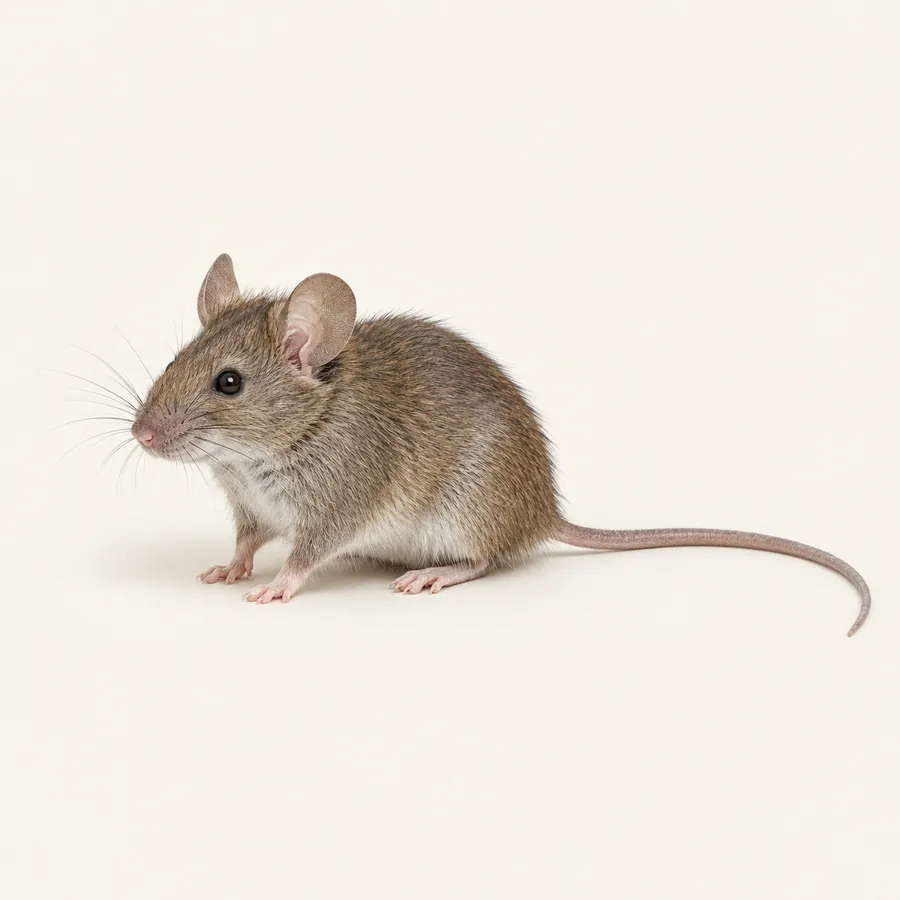
House mouse Mus musculus
A 7–10 cm body and a tail longer than the body. Droppings the size of a grain of rice, 3–6 mm. It lives inside the apartment, in kitchen cupboards, behind the fridge and in the storeroom, and it’s curious: it approaches a new object within hours. I treat it close to the floor and inside the home.
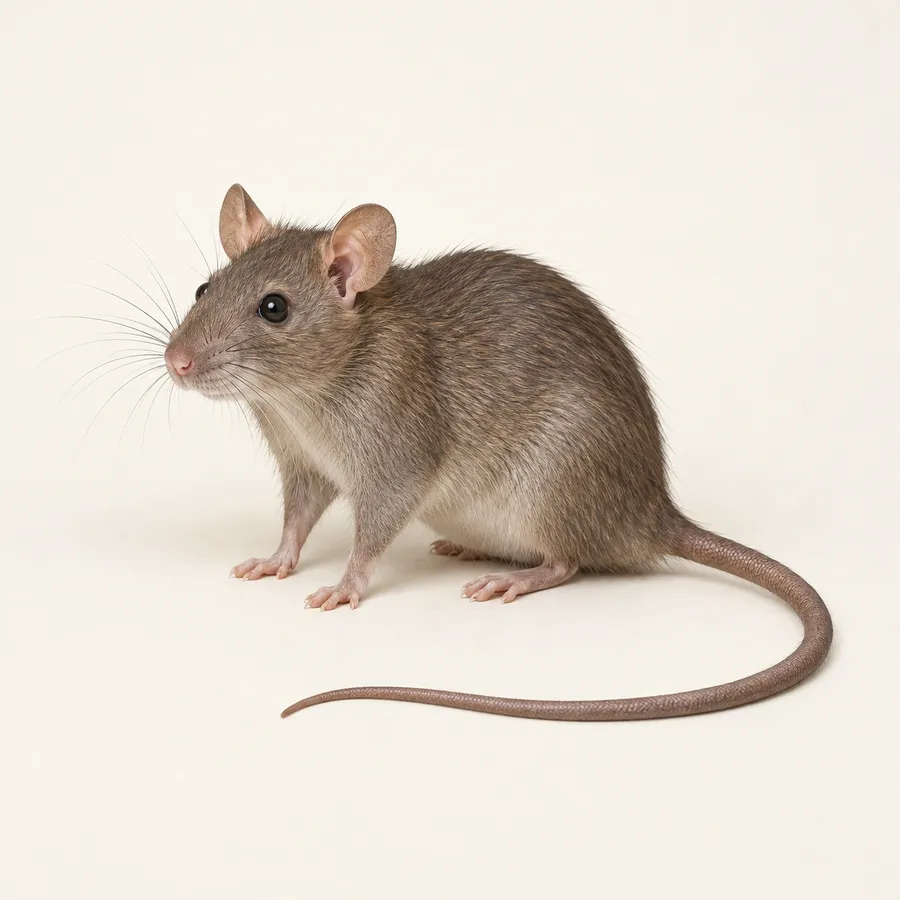
Roof rat Rattus rattus
A 16–20 cm body and a tail longer than the body. Droppings about a centimeter long, pointed at the ends. It’s an excellent climber and lives up high: suspended ceilings, roofs, pergolas, gutters and palm crowns. It’s wary of anything new, can avoid an unfamiliar object for days, and needs water every day.
Brown rat Rattus norvegicus
The largest of the three: a 20–25 cm body and a short, thick tail. Droppings 1.5–2 cm long with blunt ends. It lives at ground level and below: in sewers, parking garages and burrows in the garden. It’s wary too and needs water every day, so a leaking tap in the yard makes a big difference to it.
Weeks can sometimes pass between the night a rodent gets into the house and the night you first hear it. They’re active in the dark and move along the walls, so I get most of my information from the signs they leave. Each sign tells me something different.

- 1
Droppings
They’re a map of movement: along the walls, behind the fridge, in a low drawer and in storeroom corners. A fresh dropping is dark, moist and shiny, and an old one is greyish and crumbly. That tells me whether the activity is happening now or ended long ago.
- 2
Dark, greasy smears
On a wall corner, around a pipe opening or under a door. Grease from the fur rubs off on the same spot again and again, so a smear like this marks a regular route, not a one-off visit.
- 3
Gnaw marks
Fresh gnawing is lighter than the material around it, with sharp edges. Old gnawing darkens. Look at cardboard boxes, food packaging, the frame of the service door and cable insulation.
- 4
Noises at night
Scratching and scurrying in the suspended ceiling or the roof in the small hours point to a roof rat. A low rustling behind a kitchen cupboard or under the washing machine usually points to a mouse.
- 5
An ammonia smell
A sharp smell that builds up in closed spaces in particular: a storeroom, a shutter box or the cupboard under the sink.
- 6
A nest, and a dog staring at a cupboard
Torn paper, cotton wool or insulation gathered into a corner. And a cat or dog that keeps staring at the base of the fridge or at a kitchen cupboard panel.
A rodent doesn’t choose a home by chance. Something in the immediate surroundings has made your home the most convenient address within tens of meters. Trapping cuts the number of rodents for a while, but as long as the food, water, shelter and entry point remain, the space that opens up is filled again from the surroundings.
A small gap is enough
The only rigid part of a rodent’s body is its skull. A mouse gets through a gap the width of a pencil, and a rat through one the size of a coin. A gap that looks like nothing to you is an open door to them.
Food left out at night
Dry food for street cats or birds, a bin with a broken lid and bags left next to the bin. This is the cause I come across most in yards where the problem keeps coming back.
Water within reach
A rat needs to drink every day. An air-conditioner drain dripping onto the same spot, a leaking garden tap, plant saucers and a full paddling pool are sometimes the reason it chose your home in particular.
Shelter in the yard and storeroom
Piles of garden cuttings, cardboard boxes in the storeroom, wooden boards leaning against the wall and dry palm fronds that were never trimmed give them a place to nest right next to the house.
Changes on the street
Demolition, digging or sewer work scatters an existing population. When several houses on the same street contact me in the same week, that’s usually why.
With rodents, spraying doesn’t help. I work along their route: I find the entry point, close it with gnaw-proof material, and place the stations exactly where they pass.
- 1
Survey and mapping
I read the droppings, smears and gnawing, work out which rodent you have and locate the entry points. With rats I also go up to the roof, the suspended ceiling and the yard. Sometimes I set up monitoring first, to confirm exactly where the route runs.
- 2
Sealing with gnaw-proof materials
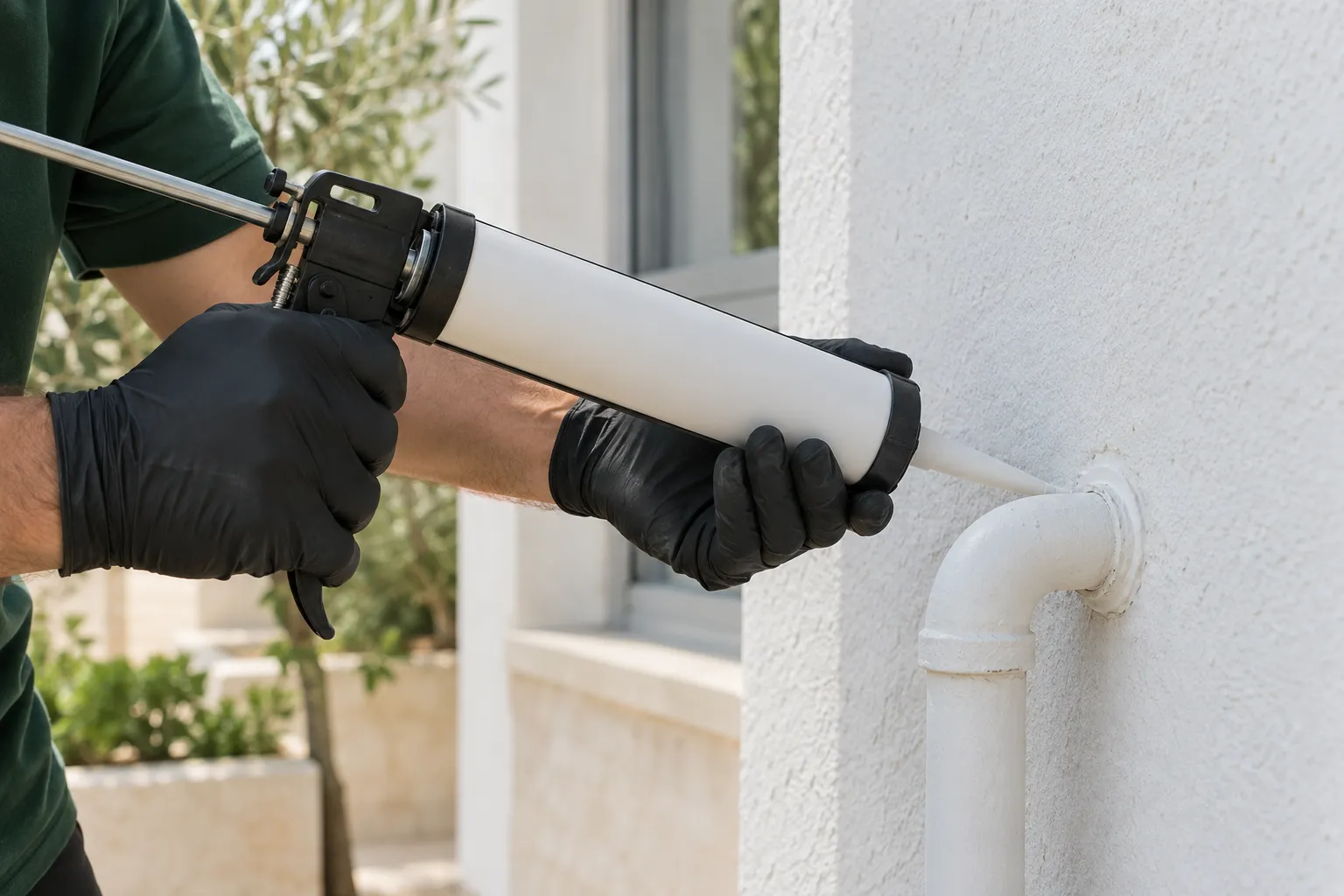
Polyurethane foam, tape or cloth get gnawed through within days and only hide the hole. I close gaps with metal mesh, sheet metal and cement filler, depending on the size and type of each opening: a pipe passage under the sink, an air-conditioner sleeve, a shutter box, the gap under the service door.
- 3
Closing in the right order
If you close every gap while the rodents are still inside, you lock them in the house. So I decide which openings are closed right away, which one stays open as a controlled exit, and what gets closed only on the next visit.
- 4
Locked stations on the route
A rodent moves along the wall, guided by its whiskers, and doesn’t cross open space. So the stations sit on the route itself, closed, locked and anchored in place. I never leave bait as a loose lump under a cupboard.
- 5
Patience in the first week
A rat sometimes avoids a new object for days, so a quiet first week is part of the process. I don’t move the stations every day, because each move makes it start getting used to them all over again.
- 6
Follow-up visit and final sealing
I come back, check consumption and activity, and close the openings that were left. At the end I send you the location of every station on WhatsApp, along with what’s safe to touch.
Do
- Photograph droppings, gnawing and dark smears before cleaning, and note when and from which direction you hear noises
- Move dry food, including pet food, into airtight containers
- Pick up the dog’s and cat’s food and water bowls at night
- Close the bins and fix any leaks you know about
- Clear access to the cupboard under the sink, the storeroom and the suspended ceiling hatch
- Clear cardboard and bags out of the storeroom and the balcony, so I can see runs and droppings on the floor
- Tell me where pipes and cables run inside the walls, if you know. That is where most of the crossings are
No need
- Sweeping or vacuuming dry droppings. Dampen them, pick them up with gloves and paper towels, and seal them in a bag
- Putting down poison yourself. It’s dangerous for children and pets, and it makes it harder for me to read the signs
- Plugging holes with foam. It gets gnawed through within days and hides the opening from me
- Buying glue boards. They cause prolonged suffering, catch lizards and cats too, and never touch the source
- Throwing out furniture or boxes because of droppings. Clean properly, seal the gaps, and that is enough
- Emptying the whole house. I work along the walls, in the corners and at the pipe crossings
Branches away from the roof
A palm trunk, bougainvillea on a pergola, a ficus branch touching the roof, gutters and outdoor cables are a staircase for the roof rat. Pruning that keeps branches away from the roof and walls closes off its route.
Cat food only by day
If you feed street cats, give an amount they finish during the meal. Food left out at night ends up with rodents, exactly when the cats are no longer around.
Closed bins
An intact lid, bags inside the bin rather than next to it, and a bin room that gets washed regularly.
No standing water
Fix leaking taps, connect the air-conditioner pipe to a drain instead of letting it drip on the ground, and empty plant saucers and paddling pools.
A tidy storeroom
Shelves instead of piles on the floor, plastic boxes instead of cardboard, and no wooden boards leaning against the wall.
Check entry points before winter
Before the first rains, go over pipe passages, air-conditioner sleeves, shutter boxes and the gaps under doors. That’s when rodents look for a way in.
How long I am in the house
The survey and the sealing take most of the time. In an apartment that usually runs one to two hours, and in a private house with a roof, a storeroom and a yard it can take half a day. Sealing is hand work, so the number of openings decides how long I stay.
Where I actually work
Along the walls, under the kitchen cupboards, behind the fridge, at the pipe crossings and in the water cupboard, in the storeroom, in the suspended ceiling void, in the shaft and around the outside of the building. I don’t spray living spaces.
You can stay at home
Rodent work involves no spraying of living spaces, so there’s no waiting time and no need to clear the house. While I seal there is drilling noise and sometimes dust, so I close the door of a room where a baby is sleeping and agree with you when to work in there.
Stations a child can’t open
I only work with closed stations, locked and anchored in place. A toddler or a dog can’t get to the bait inside. The dog and the cat can move around the house as usual. What I ask is that nobody moves the stations, because the rodent travels a fixed route along the wall.
Loose poison harms barn owls too
A barn owl, falcon, cat or dog that eats a poisoned rodent is harmed as well. That’s why the use of these products in open areas is restricted, and by law this kind of pest control is carried out by a licensed exterminator. They aren’t a product for DIY use.
No glue boards
Glue boards cause the animal prolonged suffering, also catch lizards, birds and cats, and don’t deal with the source. They aren’t part of my work.
Cleaning droppings: wet only
Sweeping or vacuuming dry droppings sends particles into the air, and with them bacteria and allergens. Dampen them, pick them up with paper towels and disposable gloves, seal them in a bag and air the room. Never pick up a dead rodent with bare hands.
Fleas it leaves behind
When a rodent dies or leaves, the fleas and ticks on it look for a new host. If bites appear at home after the treatment, tell me.
What I hand over before I leave
Exactly where each station sits and what must not be moved, which openings are now sealed and which I deliberately left open for the first week, and what to do if a smell appears. I send the same points on WhatsApp, so you have something to go back to.
The price depends on the number of hot spots. At each one I place a locked bait box, and the more boxes there are, the lower the price per box. Good sealing saves repeat visits, so I don’t drop it to bring the price down. You hear from me what it will cost in your home once I’ve identified the problem.
| Property or treatment | Price |
|---|---|
| One hot spot: visit with a bait box and a trap | ₪350 |
| 2 to 4 hot spots, one box at each | ₪250per box |
| 5 boxes or more | ₪200per box |
| Extras | |
| Sewer drain treatment | Extra₪100per drain |
How it adds up: Three hot spots in a private house and one sewer drain in the yard: three boxes at ₪250 plus ₪100 for the drain. Total: ₪850.
What changes the price
- Which rodent: a mouse inside the apartment, or a rat in the roof and yard
- How many gaps need sealing, and with what material
- Access: roof, suspended ceiling, storeroom or utility space
- An ongoing outside source, like a bin room or a building site, that calls for extra visits
- For a restaurant, warehouse or business, I give a price after an on-site survey
How you know the rodent treatment worked, and how you know they came back
The first week: they avoid anything new
A rodent, and a rat above all, keeps away for several days from any new object on its route. So in the first week the stations may not be touched at all. That’s their behaviour, not a sign that the treatment isn’t working.
Two weeks: the first sign I look for
Bait disappearing from the stations on the route, and after that fewer fresh droppings in the same places. A fresh dropping is soft, dark and shiny. An old one is dry, greyish and crumbles under pressure. That difference is the whole of reading the site.
A month in: how the file gets closed
When there are no fresh droppings, no night noises and no bait being taken, I remove the stations and finish sealing the openings I deliberately left open at the start of the treatment.
The check you can run yourself
Spread a thin band of flour or talc, about a palm wide, along the wall where you had your suspicions, and photograph it in the morning. Footprints or a tail drag mark in the powder are direct proof of traffic, even without seeing a rodent.
The signs that say they came back
Fresh droppings along a wall, new gnawing on the corner of a box or on a plastic pipe, greasy black smears at floor level, a sharp smell of urine, scratching in the ceiling or wall after a quiet spell, and a pet that suddenly takes an interest in one particular corner.
What to do when a new sign appears
Don’t put down poison. Photograph the dropping and the gnawing, mark the spot, and send it to me. There’s a warranty on the treatment. If new activity shows up during the warranty period, I come back to check the entry points and the stations and complete whatever is needed.
A smell in the days after
A rodent that dies inside a wall or a ceiling void can smell for a few days up to about two weeks, depending on its size and the heat. That’s a sign the treatment worked. I show you what to ventilate, and where it can be opened and removed when there’s access.
What’s covered, from the survey on
Before I start, I explain what’s covered. A source outside my control, like sewer work on the street or the building’s bin room, I point out at the survey stage, so you know where things stand from the start.
One trap, and what goes beyond it
A single mouse that got into the storeroom can sometimes be caught with a snap trap set on its route, right against the wall. But if there are fresh droppings in several rooms or noises in the ceiling, a trap only slows things down. Without sealing the entry point, another mouse comes in the same way.
How long does it take to get rid of mice?
When the whole problem is inside the home and the food and water are shut away, most cases show a clear drop within a few days to two weeks. When there’s an ongoing outside source, like a bin room, a neighboring garden, a building site or a damaged sewer line, more rounds are needed, sometimes in coordination with the building committee or the local authority, and the time is measured in weeks.
Do I need to leave home during mouse treatment?
Usually not. The treatment is based on sealing and closed stations, with no spraying of rooms, so there’s no broad exposure. Still, tell me in advance about a baby, pregnancy or pets. At the end of the visit I send you where each station stands and what mustn’t be moved.
There’s a strong smell at home. Could a mouse have died inside the wall?
Yes. A rodent that dies inside a wall or ceiling cavity gives off a strong smell that usually lasts one to three weeks, and sometimes small flies gather around one spot on the wall or ceiling. If the spot can be found, it’s better for me to open it up in a controlled way. If not, ventilate and wait. Air fresheners don’t make it pass any faster.
Will a cat at home solve the mouse problem?
No. A cat can deter mice in open areas, but it can’t reach nests inside walls, in suspended ceilings or behind cupboards, and that’s where the population is. And the cat’s food bowl, when it’s left outside at night, is one of the things that draws rodents to a yard the most.
Do ultrasonic mouse repellers work?
They have no proven long-term effect. Even when there’s a reaction at first, rodents get used to the noise within days, and the waves don’t pass through walls and furniture. The device doesn’t close an entry point or remove food and water, so it doesn’t replace a diagnosis and sealing.
Why didn’t the traps catch anything in the first week?
With rats, that’s expected. A rat knows its territory, notices every new object and avoids it, sometimes for days. The second reason is placement: a rodent doesn’t cross open space, and a station in the middle of the kitchen isn’t on its route. That’s why I place stations according to the signs, and don’t move them every day.
The circuit breaker keeps tripping at night. Could it be mice?
It could. A rodent’s teeth grow throughout its life and it wears them down by gnawing, including on cable insulation. That kind of gnawing usually exposes a wire rather than cutting it, so you get a recurring fault: a residual-current breaker that trips, a flickering light, an air conditioner losing contact with its outdoor unit. Have an electrician check it, and look for signs of rodents at the same time.
What diseases do mice and rats carry?
Rodents leave urine and droppings as they move, so contamination spreads along their entire route: countertops, the cutlery drawer, shelves. They’re linked to food poisoning such as salmonella, and to leptospirosis, whose bacteria are shed in urine and spread through contaminated water and soil. Proteins from their urine and fur also trigger allergies and asthma in children.
Mouse or rat? How can you tell from the droppings?
By size and shape. A mouse dropping is the size of a grain of rice, 3–6 mm. A roof rat’s is about a centimeter, pointed at the ends. A brown rat’s is 1.5–2 cm, with blunt ends. Location helps too: droppings up high, on a beam or in the ceiling, point to a roof rat. A photo with a coin next to the dropping is enough for me to identify it.