In short
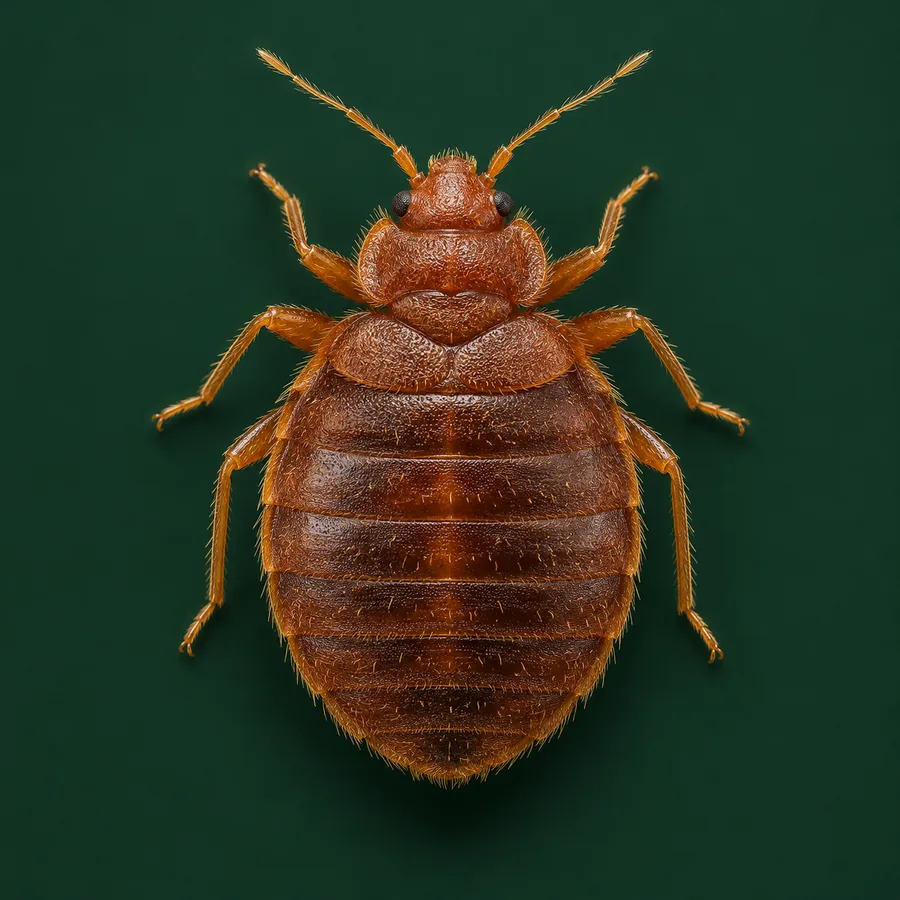
The bed bug is a flat, 4–5 mm insect that feeds on blood and hides in mattress seams and cracks within a metre or two of where you sleep. Look for black dots in the seams, small blood spots on the sheet and bites that appear in the morning. I treat in three stages in one visit: mapping, steam with targeted vacuuming, then a residual layer with dust and a growth regulator. Furniture and clothing stay, and the treatment has a warranty.
- Size
- Adult 4–5 mm · Nymph 1–4 mm · Egg about a millimeter
- Color
- Reddish brown. Swells and darkens after a blood meal
- Movement
- Walks only. Doesn’t fly or jump
- Activity
- During the dark hours, near where people sleep
- Food
- Blood only, at each of the five nymph stages and as an adult
- Without food
- Survives for weeks and even months
- Diseases
- No evidence that it transmits diseases to humans
- Season
- All year round, even in winter with the windows closed and the AC on
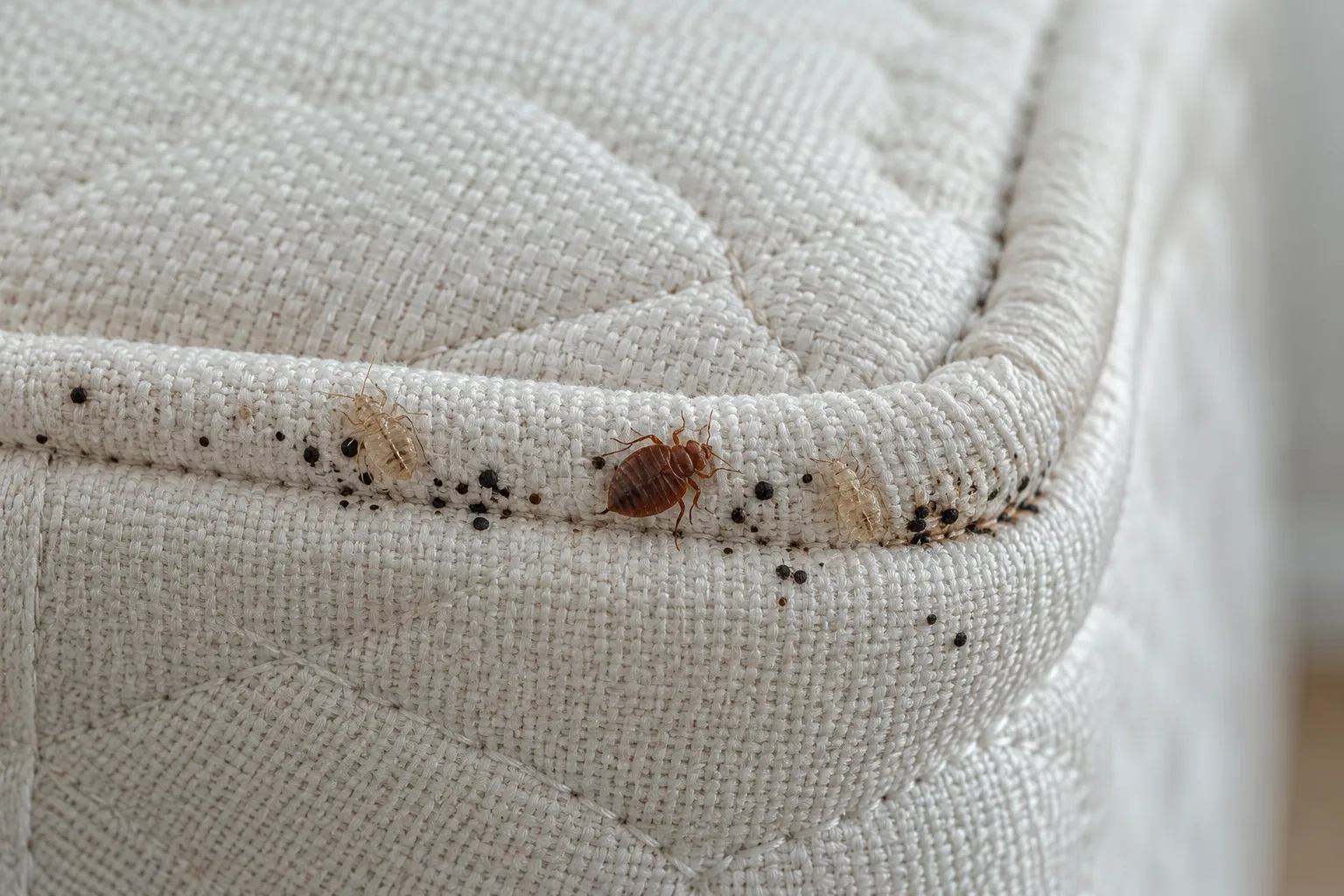
The adult is reddish brown and as flat as a lentil. The young are small and pale, almost see-through, so they’re hard to spot on white bedding. In most homes, bed bugs are found by what they leave behind. And they have nothing to do with dirt: I find them in the best-kept apartments too, because they arrive with people and belongings, in a suitcase from abroad, on a second-hand sofa or from a neighboring apartment.
- 1
Black dots in the seams
Like marks from a fine-tip pen in the mattress seams and the corners of the bed base. A damp cloth smears them into a rusty-brown stain, because they’re digested blood. Dirt or mold doesn’t smear like that.
- 2
Small blood spots
On the sheet or the pillowcase, usually on the side you sleep on.
- 3
Shed skins and eggs
Empty, translucent shells shaped like the insect, and whitish eggs a millimeter long stuck to seams and cracks. They mean the population is breeding right there in your home.
- 4
Bites in a row, in the morning
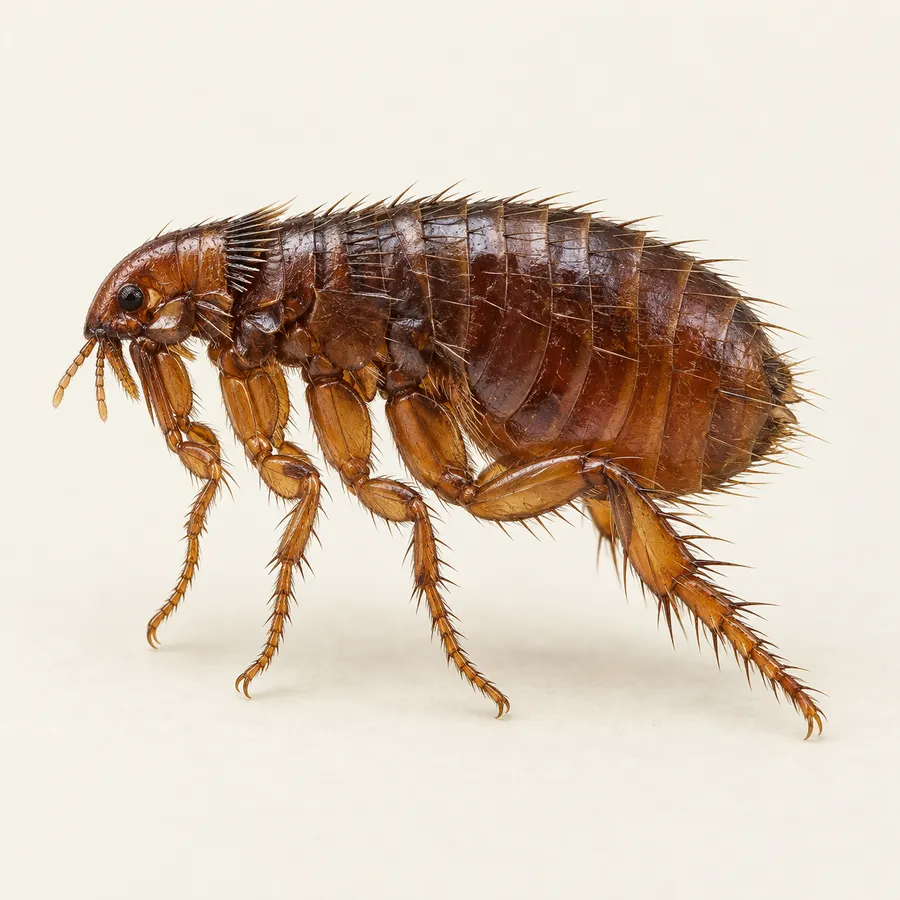
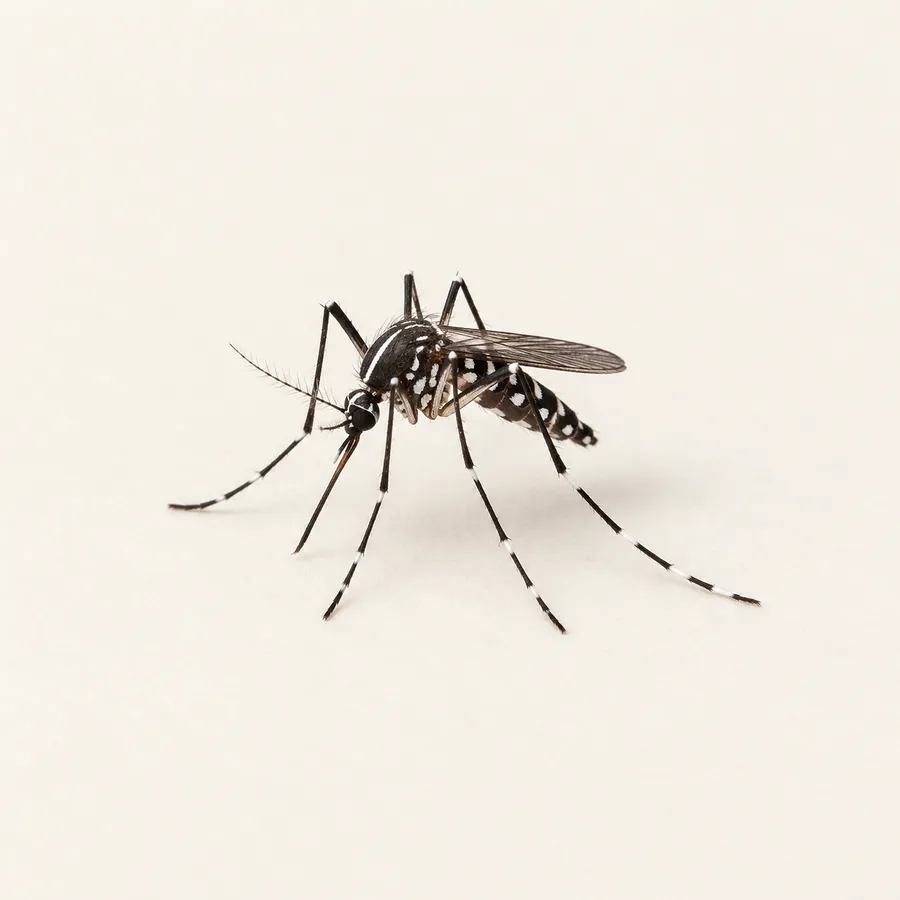
Two or three bites close together on the shoulders, arms, neck or back, found after a night in bed. Fleas bite mainly around the ankles, and mosquitoes also bite in the evening and in a scattered pattern. A doctor gives the medical diagnosis, and I identify the pest by inspecting your home.
- 5
A heavy, sweetish smell
Noticeable mainly in a long-standing infestation and in a room that has been kept closed.
- 6
Where to look
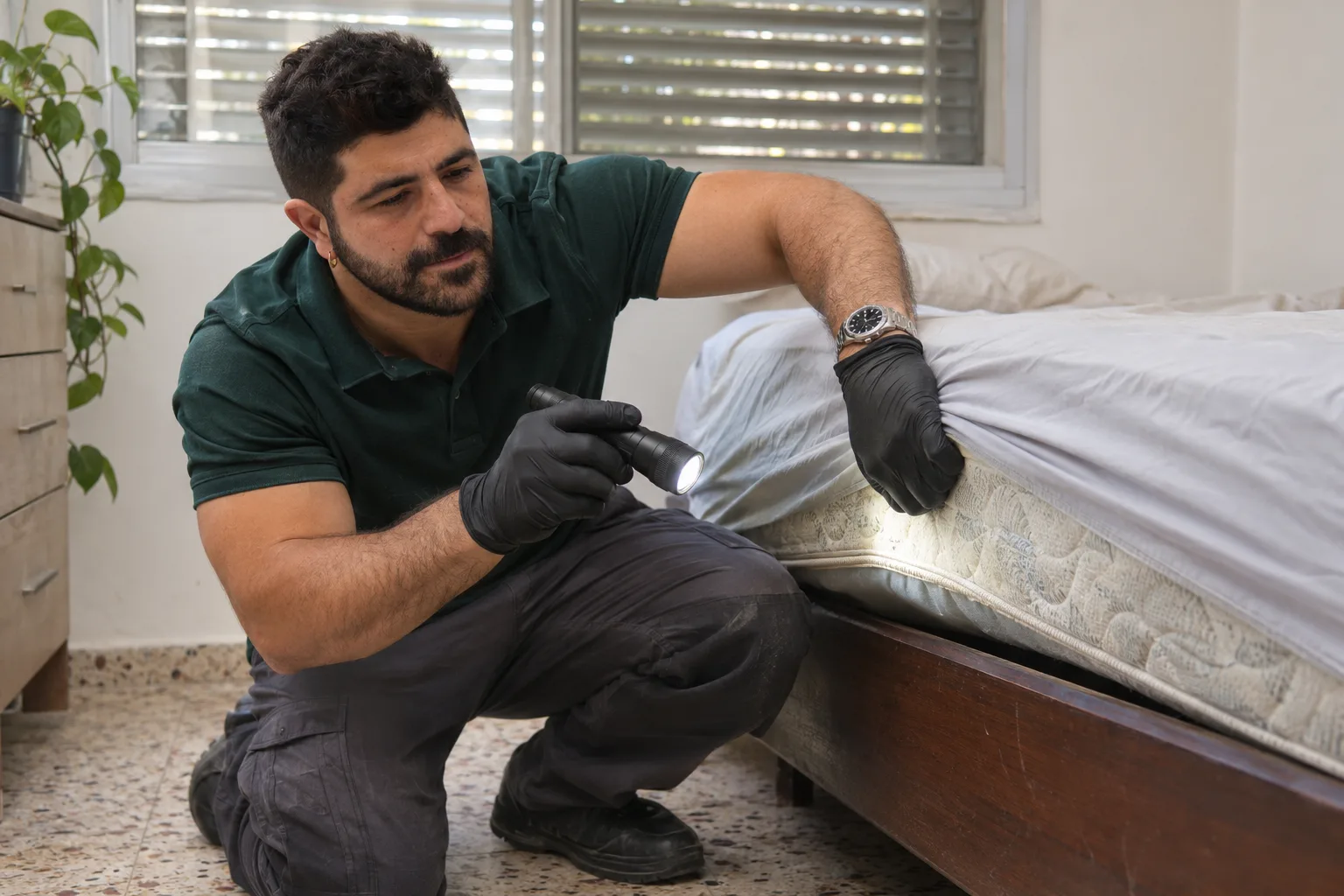
Bed bugs walk and don’t fly, so they stay within a meter or two of where you sleep. With a flashlight, scan the mattress seams and corners, the storage base and the screw heads, an upholstered headboard, the nightstand drawer runners, skirting boards and behind pictures. And don’t forget any sofa or armchair where someone falls asleep.
Household spray only works on what it touches, and bed bugs live exactly where the spray can’t reach. These are the reasons I see again and again:
It works on contact only
The spray kills what it touches. Most bed bugs hide deep in cracks, in screw sockets and under the plywood, and never meet it at all.
The eggs survive
The eggs are glued into cracks and protected by a shell. They hatch within one to two weeks, and the cycle starts all over again.
The bugs scatter
Some sprays repel. An exposed bed bug moves to another crack, to the next room and sometimes to the neighbors’ apartment, and the treatment that follows will be wider and more expensive.
Resistance to products
Resistance to whole groups of active ingredients has been documented in bed bug populations. Spraying the same product again and again weakens its effect, so I combine several modes of action.
Flammable liquids and foggers
Please don’t spray alcohol, solvents or kerosene on mattresses. They’re flammable, and a bedroom has electricity. Foggers scatter the bed bugs and leave you with product in the air.
Each layer has a different job in the bed bug’s life cycle, and none of them covers it alone. I set the scope of the treatment by what I find in the diagnosis, not by the size of the apartment.
- 1
Diagnosis and mapping
I scan every place in the home where people sleep and rest, including sofas, armchairs and bunk beds, and mark the hot spots and the routes they move along. That way I know how many rooms really need treatment.
- 2
Preparing from a short list
Before the visit I send you a preparation list for your home on WhatsApp. There’s no need to empty all the wardrobes or wash all your clothes.
- 3
Treatment in three layers
A microencapsulated layer that stays active on surfaces for weeks, a targeted treatment that immediately reduces the number of bed bugs at the hot spots, and a growth regulator (IGR) that stops the young from maturing and breeding.
- 4
Follow-up visit
After 2–3 weeks, when the eggs laid before the treatment have hatched, I come back to check and complete the treatment if a hot spot remains.
- 5
Monitoring and warranty
I leave you simple monitoring instructions for the following weeks: a light-colored sheet and a weekly check of the seams. If new signs appear during the warranty period, I come back.
Do
- Gather bedding, curtains and other fabrics into sealed bags while still inside the room
- Wash, then tumble-dry on high heat for at least 30 minutes. It’s the heat in the dryer that kills them
- Clear out whatever is under the bed and pull the bed away from the wall
- Give me access to the bed on three sides, about half a metre wide
- Empty the bed’s storage base and the nightstand drawers, and leave them open
- Vacuum the room on the morning I arrive, and empty the bag into a bin outside the house
- Tell me in advance about a baby, pregnancy, asthma, an aquarium or pets
No need
- Throwing out the mattress. In most cases I treat it
- Emptying all the wardrobes
- Spraying before I arrive
- Moving furniture, boxes or a child to sleep in another room
- Dismantling the bed yourself. Taking it apart opens closed cavities and scatters what is inside them
- Washing everything in the house. The egg is glued into a seam or a crack, it doesn’t sit loose on fabric
Keep sleeping in your bed
Don’t move to the living room. Bed bugs follow their blood source, and you’ll drag them to the sofa. When you sleep in the bed, they come out to you and cross the surfaces I treated on the way.
Don’t wash treated surfaces
Washing removes the layer the treatment relies on. I tell you at the end of the visit what you can clean and when.
A sealed mattress cover, after the treatment
A cover that closes off the seams makes monitoring much easier. Put it on only after the treatment, because on an infested mattress it shields the bed bugs from the product.
Your suitcase after a holiday
Open it on a hard floor or in the bathtub, not on the bed. Check the seams and pockets, put the clothes straight into the washing machine and a hot dryer, and keep the suitcase out of the bedroom.
Second-hand furniture
Check the seams and the frame before the piece comes into your home. A second-hand sofa or mattress is one of the most common ways bed bugs get into a home.
How long I am in the house
It depends on how many rooms are infested. One room usually takes one to two hours, and an apartment with several bedrooms and a sofa people sleep on can run to three hours or more. I treat every infested room in the same visit.
Where I actually work
On the bed and within one to two metres of it: mattress seams, the base, the headboard, the storage box, the nightstand, the skirting boards and the strip of floor along the wall, plus any sofa or armchair people sleep on. I don’t go over the whole apartment.
A clear time to come back
You usually return home 4–6 hours after the treatment, with cross-ventilation. I send you the exact time on WhatsApp, based on the product and its label.
Babies and pregnancy
Tell me in advance. I adapt the method, extend the waiting time and help you set up an alternative room before I even start.
Pets and aquariums
Dogs and cats leave the home for the whole waiting time, along with their bowls and bedding. Cover the aquarium and switch off the air pump, because it draws air from the room into the water.
Approved products only
I only use products approved in Israel, applied according to the label, and they’re odorless. No foggers and no misting in a bedroom.
The first night you sleep in your own bed
It sounds backwards and it’s part of the treatment. The bed bug comes out towards the blood source and crosses the surfaces I treated on the way. Anyone who moves to the sofa drags the infestation into the living room and gains another room to treat.
What not to wash afterwards
The skirting boards and the strip of floor I treated are not washed and not sprayed. Vacuuming is allowed and even helps. Clean bedding comes out of the sealed bag only after the room has been aired.
The price depends on the number of rooms that need treatment. It includes the diagnosis, the three-layer treatment, a follow-up visit and a warranty. I tell you what it will cost in your home after the diagnosis.
| Property or treatment | Price |
|---|---|
| First room | ₪1,000 |
| Extras | |
| Each additional room | Extra₪500 |
How it adds up: Bed bugs in two bedrooms: ₪1,000 for the first room and ₪500 for the second. Total: ₪1,500.
What changes the price
- How many rooms are infested, not how many rooms the apartment has
- Sofas, armchairs and extra beds that need treatment
- A long-standing infestation that needs a follow-up treatment
- In a shared building, a coordinated treatment of several apartments in a single day costs less per apartment and stops the bed bugs from coming back from the neighbors
How you know the bed bug treatment worked, and how you know they came back
The first days: you may see more, not fewer
In the first days bed bugs come out of their hiding places and get exposed, so sometimes you see more of them than before. A single bite in the first two weeks is part of the process.
The weekly check I ask for
A light-coloured sheet on the mattress, and a torch check once a week: the seams, the buttons and labels, the base joints, and the back of the headboard with the skirting behind it. The same places on the same weekday, so you have something to compare.
What to count, and when
Bites are a slow measure, because the skin reaction can appear days after the bite itself, and some people don’t react at all. The fast measure is the faecal spots. Two weeks with no new spot on a light sheet is a real sign of improvement.
The signs that say they came back
New black faecal spots in a seam or on the sheet, which spread like ink when you touch them with damp paper; small blood stains on the sheet in the morning; transparent shed skins in the seams; and a sharp sweetish smell in a closed room.
The check two to three weeks later
It’s part of the same treatment, not a repeat visit that signals failure. By then the eggs that were in the room on treatment day have hatched. I scan the same spots, check the monitoring traps and top up if an active focus is left.
When you can call it finished
Six to eight weeks with no new bite and no new faecal spots, in a room somebody sleeps in all the time. A room left empty doesn’t count as a test, because without a host the bed bug simply doesn’t come out.
What to do if you see one
Don’t spray and don’t move to another room to sleep. Photograph it and the seam it’s sitting in, and send it to me. There’s a warranty on the treatment. If new signs appear during the warranty period, I come back to check and treat. I explain what’s covered, and for how long, before I begin.
What isn’t covered
New bed bugs brought in after the treatment, for example with a second-hand sofa or a suitcase from abroad. That’s a new event, and I say so up front.
I don’t sell a kit for bed bugs
For cockroaches, ants and gnats, DIY treatment can work. For bed bugs it doesn’t, so here I come in person. What is in your hands is the preparation, and I’ve gathered all the details, item by item, in the bed bug preparation guide.
Do bed bugs transmit diseases?
There’s no evidence that bed bugs transmit diseases to humans. The harm is itching, skin infection where scratching has broken the skin, and above all poor sleep and anxiety that go on even after the bites are gone. With children and older people, that’s exactly why it’s worth treating quickly rather than waiting.
Do I need to throw out the mattress?
In most cases, no. The mattress is a surface I treat, and after the treatment you can wrap it in a sealed cover that closes off the seams. Dragging a mattress through the hallway and stairwell before the treatment actually spreads the bed bugs, and sometimes someone else picks it up off the street.
Can there be bed bugs in the sofa but not in the bed?
Yes. Bed bugs settle near a regular sleeping spot, not necessarily a bed. An armchair where someone naps every afternoon, a sofa bed in a guest room or a temporary mattress on the floor are hot spots I come across all the time. That’s why in the diagnosis I scan every resting place in the home, not just the bedroom.
Why does only one of us wake up with bites?
Because reactions to bites vary from person to person. One person gets red, itchy spots within hours, another only after a few days, and some don’t react at all. Most likely the bed bugs are biting both of you. So you can’t rule out bed bugs because there are no bites, and you can’t confirm them by bites alone.
How many treatments does it take to get rid of bed bugs?
In most apartments I carry out one treatment and a follow-up visit after 2–3 weeks. With a long-standing infestation, or when the neighbors have bed bugs too, a follow-up treatment is sometimes needed. I tell you this at the diagnosis stage, before you pay.
I saw a bed bug a few days after treatment. Does that mean it failed?
Usually not. In the first two or three days, exposed bed bugs come out onto open surfaces, and sometimes you see more than before. After one to two weeks, eggs laid before the treatment hatch, and a single bite during this period is part of the process. At the follow-up visit I check whether a hot spot remains, and if so, I complete the treatment.
Can I sleep in the bed the night after treatment?
In most cases, yes, after the waiting and airing time I give you. It’s actually best to go back to sleeping in the bed, because bed bugs come out toward their blood source and cross the surfaces I treated on the way. Take the clean bedding out of its sealed bag only after airing the room.
Is a tumble dryer or a steam cleaner enough?
They help, but they aren’t a treatment. Dryer heat kills every life stage in fabrics, but it doesn’t reach the bed frame, skirting boards and cracks, which is where most bed bugs are. Steaming a mattress at home is also dangerous, because heat, moisture and electricity meet on an absorbent surface.
Can we just leave the apartment for a few weeks until they die?
It almost never works. Bed bugs survive without feeding for weeks and even months, depending on the temperature and their life stage. When you come back they’re waiting for you, and in the meantime they sometimes move to the next room or to the neighbors’ apartment, where there are people.
We’re moving. How do we avoid taking the bed bugs with us?
Treat before the move, not after. Infested boxes and furniture carry the problem to the new apartment on day one. If there’s no choice, move fabrics in sealed bags straight into the dryer at the new place, and don’t move mattresses, bed bases or upholstered headboards until I’ve checked them.
Why is there no bait or gel for bed bugs?
Because the bed bug feeds on blood only, at every one of the five nymph stages and as an adult, so there is nothing you can offer it to eat. With cockroaches and ants, bait works because the insect eats it and carries it back to the nest; with bed bugs there is no such route. That is why the treatment is built from layers it has to cross on its way to you: steam on the surfaces it sits on, a residual layer on the lines it crosses, and dust in the closed voids.
Do you travel outside the Gedera to Hadera area for bed bugs?
Yes. For every other service I work from Gedera to Hadera, and for bed bugs I travel anywhere in the country. On a day like that I arrive with all the equipment and treat every infested room in the same visit, and the check two to three weeks later is scheduled at the first visit. A trip outside the regular service area carries an addition, and I tell you what it is before we book.