In short
A pigeon that has found a nesting spot keeps coming back to it, so chasing it off, a plastic owl or an ultrasonic device won’t keep it away for long. What works is closing off the spot: pigeon netting you can barely see, spikes on ledges and AC units, and sealing shutter boxes and voids. Before installing, I clean and disinfect the droppings. No poison, and no harm to the pigeons.
- Size
- 30–35 cm long, wingspan of about 65 cm
- Nesting
- Year-round in Israel. Two eggs per clutch, and several broods a year
- Incubation
- About 18 days, and the chicks leave the nest after about a month
- Site loyalty
- A pigeon returns to the spot where it grew up or nested, even after the nest is removed
- Food
- Seeds, bread and scraps. One neighbor who feeds them is enough to keep a flock on the building
- Droppings
- Acidic, they stain stone and metal, clog gutters and harbor fungi and bacteria
- Parasites
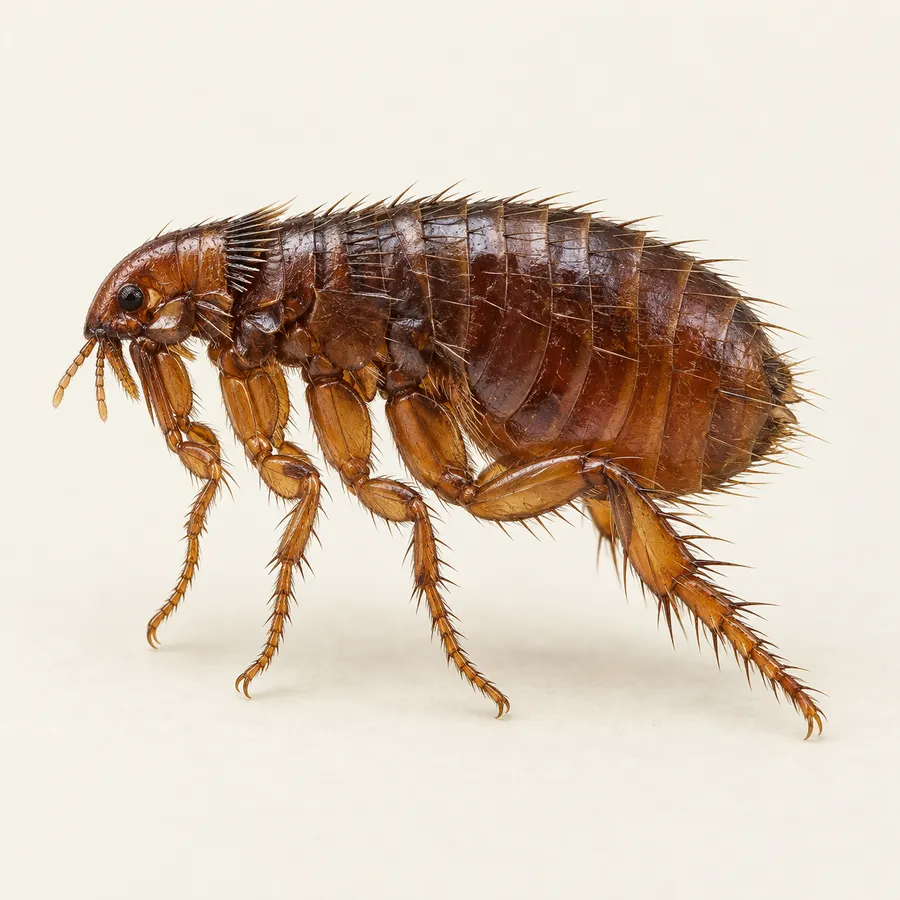
- Mites and fleas live in the nest and move into the home once it’s empty
- My method
- Netting, spikes and sealing. No poison and no harm to the pigeons
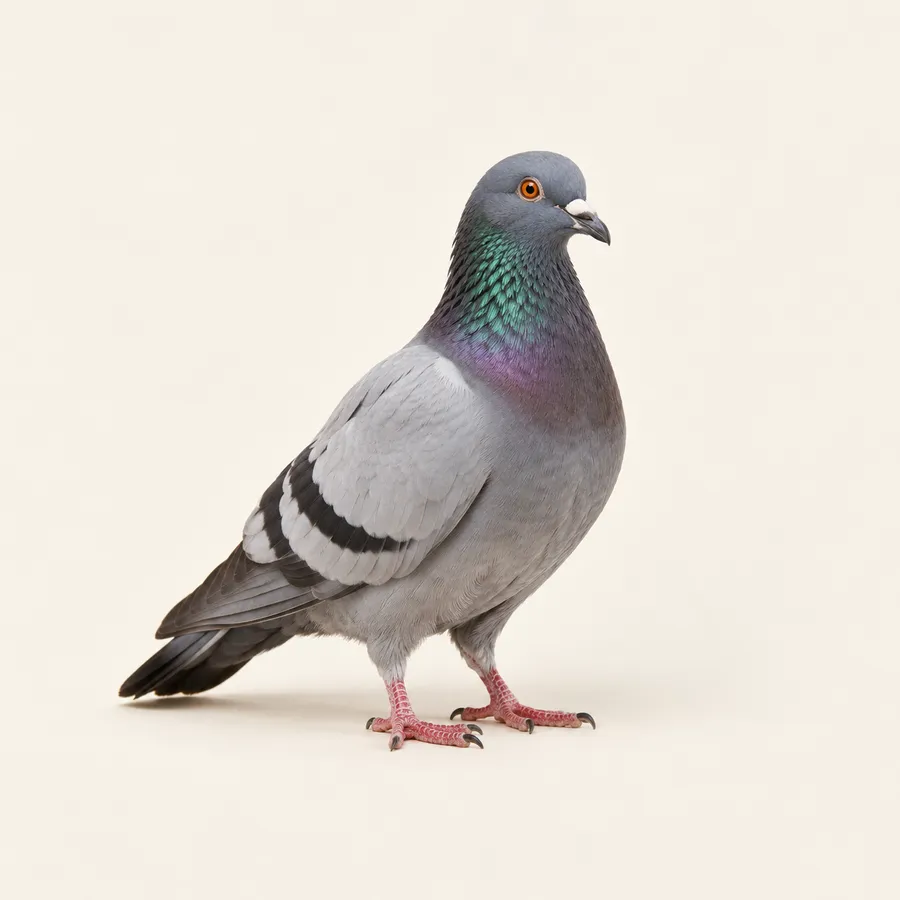
Feral pigeon Columba livia
The city pigeon: gray, with two dark bars on the wing and a glossy green and purple neck. It nests in shaded, sheltered spaces, such as behind an AC unit, in a shutter box, under a solar water heater or in an unused corner of a balcony, and it comes in pairs and flocks.

Laughing dove Spilopelia senegalensis
Smaller, about 25 cm, pinkish brown with a black-speckled patch on the neck. It builds a flimsy nest of twigs in a planter, on a shelf or in a tree on the balcony. It comes as a pair, not a flock, but keeps returning to the same planter.
Eurasian collared dove Streptopelia decaocto
Light grayish beige, with a thin black band on the nape that looks like a collar. Common in neighborhoods with gardens, it nests in trees, on AC units and on balcony shelves.
A pigeon that lands on the railing for a moment is a visitor. Pigeons that come back to the same corner every day, in a pair, with twigs in their beaks, are already building a nest. The earlier you spot it, the easier it is to close off the spot.

- 1
Droppings that build up
A layer of droppings under the AC unit, on the windowsill or in a corner of the balcony. Buildup in one place means the pigeons rest or sleep there, not just pass through.
- 2
Twigs and feathers
Twigs, straw and feathers behind the AC unit, inside a planter or under the solar water heater. That’s a nest being built, or one that already has eggs in it.
- 3
Cooing early in the morning
Cooing every morning from inside the shutter box or behind the AC unit. Usually that means a regular pair lives there.
- 4
Chicks in a corner
Fluffy gray chicks in a quiet corner. A nest with chicks needs planning, and I coordinate with you before anything gets closed off.
- 5
Bites after the nest is empty
Itching and small bites in the home, right after the pigeons have left. Mites and fleas from the abandoned nest go looking for a new host, and sometimes come in through the window or the shutter box.
- 6
An overflowing gutter
A gutter that overflows in the first rain, or a puddle that never dries on the roof. Pigeon droppings and twigs can clog it.
Most people who contact me have already tried everything: a plastic owl, shiny CDs, spraying water and an ultrasonic device. It works at first, and after a few days the pigeons are back. Here’s why:
Loyalty to the same corner
A pigeon returns to the place where it nested or grew up. Removing the nest without closing off the spot holds it back for a few days, no more.
They get used to scare tactics
An owl that never moves, a shiny CD or an ultrasonic device scares pigeons for the first few days. They learn very quickly that there’s no danger, and go back to landing right next to them.
A steady food source nearby
A neighbor scattering bread, a bowl of cat food or scraps left on a balcony keep the flock in the area. As long as there’s food, they’ll look for a corner close by.
The wrong kind of net
A net that’s too thin, a green net from a garden store or a loosely attached net tears or comes loose, and the pigeons get in from the side. Pigeon netting has to be UV-resistant and stretched on a cable.
With pigeons I don’t use pesticides. The job is to close off the spot, in a way that doesn’t hurt the pigeon and doesn’t spoil the look of your home.
- 1
Inspection on site or from photos
I check where the pigeons land, where they sleep and where the nest is, and measure the openings. From a single balcony to an entire facade, the solution depends on the place.
- 2
A nest with eggs or chicks
I don’t close a net over a nest that has eggs or chicks in it. We decide together when and how to remove it, so that no pigeon is left trapped behind the net.
- 3
Cleaning and disinfecting
I wet the droppings before scraping them so no dust gets into the air, collect them in sealed bags and disinfect the surface. Installation only goes onto a clean surface.
- 4
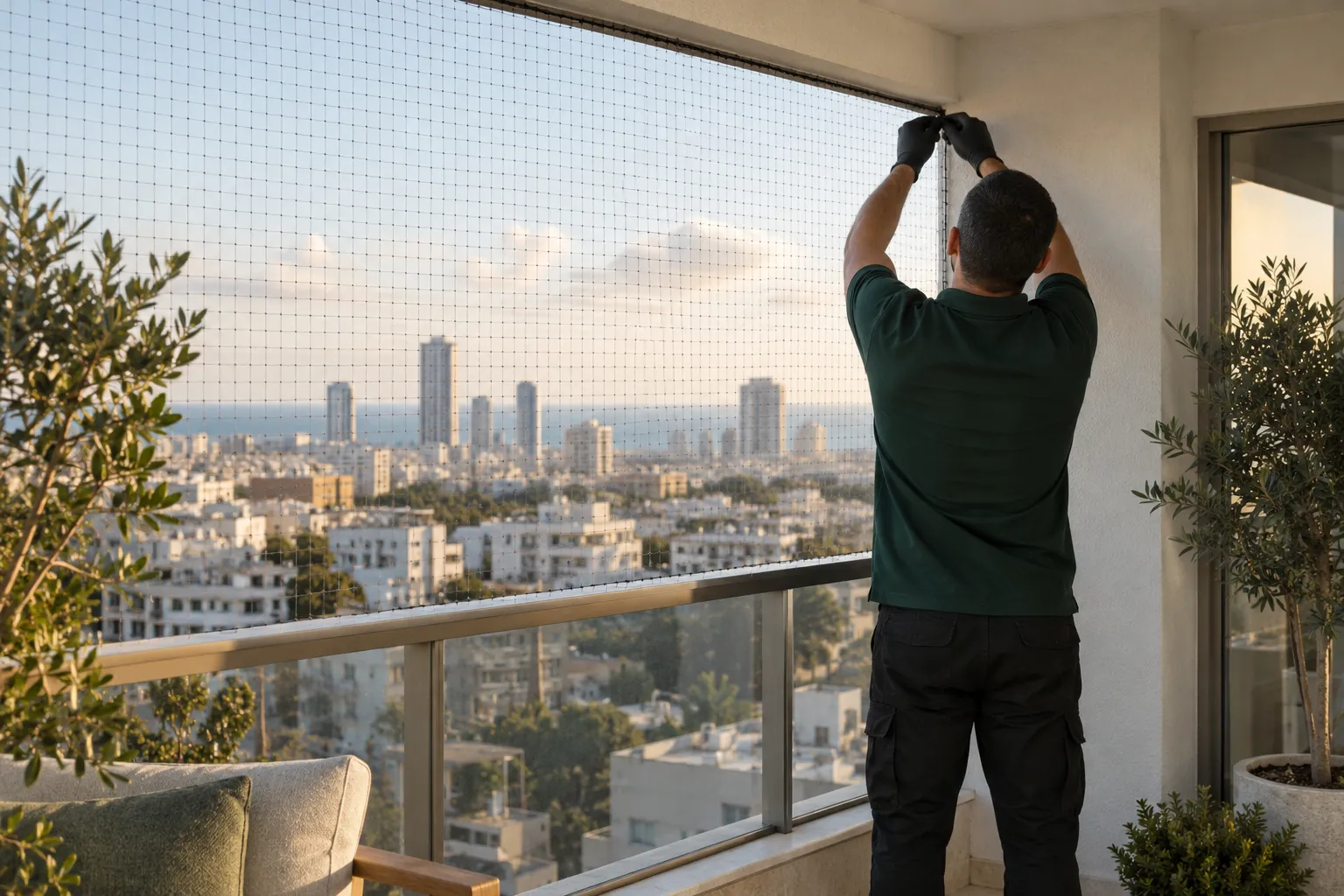
Pigeon netting
UV-resistant netting in a color that blends with the facade, stretched on a metal cable and anchored to the wall. It closes off the entire balcony opening, and from a distance you can barely see it.
- 5
Spikes and sealing
On windowsills, AC units, signs and railings I install blunt spikes that stop the pigeon from landing without injuring it. I seal shutter boxes, voids under the water heater and gaps behind AC units.
- 6
A final check after installation
I go over every corner to make sure there’s no gap a pigeon can squeeze through, and explain how to look after the net over time.
Do
- Clear plants, furniture and laundry off the balcony, or move them to one side
- Photograph the balcony or the facade from several angles and send it to me in advance, so I know what to bring
- Stop feeding pigeons, and ask the neighbors to do the same
- Coordinate with the building committee when the work is on a shared facade or the roof
- Leave me access to a power outlet on the balcony
- Close the windows in the adjoining rooms and take the laundry in, because of drilling dust
- Keep children and pets off the balcony while I work
No need
- Cleaning up the droppings yourself without a mask and gloves. I clean and disinfect
- Hosing the balcony down. A jet of water scatters dry droppings across the floor and onto the neighbours below
- Taking down a nest before I’ve seen it
- Buying an owl, CDs or an ultrasonic device in the meantime
- Putting out poison or bird glue
- Clearing the house. The work happens on the balcony or the facade only
Don’t feed them
Not even crumbs from the balcony. A steady food source is what keeps a flock on the building, and a polite word with the neighbor who feeds them helps every resident.
Close it off early
A pigeon that lands in the same corner several days in a row is already choosing a spot. Closing it off now is simpler than removing a nest with chicks a month from now.
A balcony that gets used
A laundry balcony crammed with boxes, with laundry that never moves, is a quiet spot pigeons love. Clearing it and using it every day disturbs them.
Check the net
Every few months it’s worth checking that the net is taut and there are no tears in the corners, especially after a storm or a visit from an AC technician.
AC units and solar water heaters
The space behind the AC unit and under the solar water heater is the first place pigeons choose. When you install a new AC unit, it’s worth closing off the space behind it right away.
A clean roof and gutters
Cleaning the gutters before winter keeps droppings and twigs from building up, and shows you early if pigeons have started nesting on the roof.
How long the work takes
One balcony usually takes two hours to half a day, depending on its size, the number of anchor points and how much droppings need cleaning first. A whole facade or a roof is a day’s work or more.
The order I work in
First inspection and measuring, then removing a nest if there is one, then cleaning and disinfecting, and only at the end tensioning the net or fitting the spikes. A net stretched over droppings doesn’t hold, so the cleaning comes first.
Noise, dust and access
There’s drilling into the wall, and with it noise and dust. I close the balcony door and ask you to take the laundry in and shut the windows in the adjoining rooms. While I work, the balcony is out of use.
When the balcony is usable again
The exclusion itself is physical, so there’s no product waiting time. After the disinfection I ask you to wait until the surface dries, according to the product label, and I give you that time when I finish.
Children and pets
They stay indoors until I’m done. Once the net is tensioned, the area is clean and the surface has dried, the balcony goes back to normal use.
Wet it before you scrape
Dry droppings crumble into dust that may contain fungi and bacteria. Wet them with water and a little soap, scrape while they’re damp, and never sweep or vacuum them dry.
Mask and gloves
For a large amount, say a balcony that hasn’t been cleaned in months, work with gloves and a suitable respirator mask, and close the bags before taking them out. Anyone with lung disease or a weakened immune system shouldn’t do the cleaning themselves.
No poison
I don’t poison pigeons. Poison also harms cats, birds of prey and other birds, and puts children who reach it at risk. A poisoned pigeon can also die inside a shutter box or a gutter.
Mites after a nest is removed
Once a nest is removed, mites left behind in it can get into the next room. I treat the nest area, and if anyone at home is getting bitten, tell me.
Stay off the railing
Don’t stand on a railing, a chair or a ladder on the balcony to take down a nest or stretch a net. Installation at height and on a facade is done only with proper safety equipment.
The price includes cleaning and disinfecting the droppings, materials and installation. I tell you what it will cost in your case once I’ve seen the place, or photos with measurements.
| Property or treatment | Price |
|---|---|
| Laundry balcony or small balcony Most common | ₪1,200 |
| Spikes and sealing: AC units, ledges and shutter boxes | From ₪1,200 |
| Large living room balcony | From ₪1,800 |
| Roof, solar water heaters or facade of an apartment building, after a site survey | From ₪2,500 |
What changes the price
- The size of the opening to close off, in square meters
- Height and access: which floor, on the roof, or whether access from outside is needed
- The amount of droppings and the number of nests to clean
- The number of AC units, ledges and voids to seal
How you know the exclusion worked, and how you know the pigeons came back
The first days: they still try
A pigeon used to landing on your railing will keep trying for a few more days, perch on the edge of the net and fly off. That’s normal. What matters is that it can’t land and can’t get inside.
Two weeks: the balcony stays clean
The simplest measure is droppings. After the cleaning, a balcony that stays clean for two weeks means there’s no more landing and no more roosting. That’s the measure I ask you to watch.
How I check at the end of the installation
I go over every corner and along the tension line looking for a gap a pigeon could squeeze through. A pigeon gets in through an opening far smaller than it looks, so that check is part of the job rather than an extra.
The check you can run yourself
Every few months, look at the corners and the anchor points: a net that has gone slack in a corner, a cable that has worked loose, or a small tear next to an air conditioner that was moved. All of those close up easily before a pigeon finds them.
The signs that say they came back
Fresh droppings on a sill or on the balcony floor; cooing in the morning from the direction of the air conditioner or the shutter box; feathers and twigs piling up in a corner; and a pigeon standing on the edge of the railing again at fixed times.
If you find a gap
Don’t climb and don’t try to close it yourself. Photograph it from below or from the window, and send it to me. There’s a warranty on the installation. If a pigeon finds a way in during the warranty period, or the net comes loose from its anchors, I come back and fix it.
A nest at the neighbours is a different story
A balcony I closed stays closed, even if there’s a nest above it or below it. But as long as the building has an open balcony or a neighbour who feeds them, the flock stays in the area and keeps trying. I say that up front.
What isn’t covered
A tear caused by cutting, by a technician’s work or by moving an AC unit isn’t part of the warranty. I explain the terms before installation, and a repair like that can be arranged with me.
What you can do yourself
When a pigeon has only just started landing, you can clear the corner, cut off every food source and arrange planters or boxes so that no free ledge is left. Once there’s a nest, droppings building up or a pair coming back every day, only physically closing off the spot will help.
There are eggs in the pigeon’s nest. What should I do?
I don’t close a net over a nest with eggs or chicks, so that no pigeon gets trapped and starves behind it. In most cases we wait for the chicks to leave, about a month after hatching, and then clean up and close off the spot. When waiting isn’t possible, I explain the options and we decide together.
Will pigeon netting make my balcony look ugly?
When it’s installed properly, you can barely see it from a distance. I choose a color that blends with the facade, stretch it on a cable so it doesn’t sag, and anchor it to the frame of the opening. From inside the balcony you see the view through it, and you can still hang laundry and sit outside.
Do pigeons spread disease?
The main risk is dry droppings that build up, because they can contain fungi and bacteria that travel in dust. That’s why you clean them wet, with gloves and a mask, and don’t sweep them dry. A pigeon nest also brings mites and fleas, which bite people once the nest is empty.
Does a plastic owl or an ultrasonic device keep pigeons away?
For a few days. Pigeons are wary of anything new, but they quickly learn that an owl that never moves and a device that beeps aren’t dangerous, and they go back to landing next to them. Shiny CDs and reflective tape work the same way. What lasts is closing off the corner with netting, spikes or sealing.
Do the spikes hurt the pigeons?
No. The spikes I install are blunt, made of rigid plastic or stainless steel, and they simply leave the pigeon no comfortable surface to land on. It tries, finds there’s nowhere to stand, and moves on. They suit narrow ledges, AC units, signs and railings, not a large balcony opening.
Pigeons are nesting under the solar water heater on the roof. What can be done?
It’s one of the spots I see most often in buildings. The space under the tank and the solar collectors is shaded and sheltered from the wind. I clean out the droppings and nests, and close off the space with netting or spikes so the water heater can still be reached for repairs. When the roof is shared, the job is usually ordered by the building committee.
How long does pigeon netting last?
Good-quality UV-resistant netting lasts for many years when it’s stretched properly and doesn’t get damaged. What shortens its life is usually damage from outside, for example from an AC technician’s work or from moving a water heater. It’s worth checking it every few months and fixing a small tear before it grows.
The pigeons left and now we’re getting bitten at home. Is there a connection?
Probably, yes. Pigeon nests are home to mites and fleas that feed on the chicks. When the nest empties, they look for a new host and come inside through a window or a shutter box. I treat the nest area and the openings into the home, and it’s important to close off the spot so the pigeons don’t come back to nest there.
My neighbor feeds the pigeons. What can I do?
First, have a calm talk with them and explain that the food keeps a whole flock on the building and dirties everyone’s balconies. If that doesn’t help, the building committee can raise the issue with all the residents. In the meantime, netting and spikes protect your balcony even while the feeding goes on.