In short
Gnats in the kitchen or bathroom almost always come from a single source you can find: fermenting fruit, scraps at the bottom of a bin, or a layer of slime inside a drain. House flies breed in garbage and droppings, usually outdoors. Spray only kills what’s flying. I track down the source, clean or treat it and close the ways in, and then the number of gnats drops within days.
- Size
- Fruit fly 2–3 mm · drain fly 2–5 mm · house fly 6–7 mm
- Life cycle
- From egg to adult in about one to two weeks, depending on the heat and the species
- Where they breed
- Fruit flies: fruit and sweet scraps · drain flies: slime inside drains · house flies: garbage and droppings
- Food
- Yeast, bacteria and decaying organic matter. They don’t bite or suck blood
- Flight
- Drain flies are weak fliers, moving in short hops and resting on the walls near the drain
- Health
- House flies carry bacteria on their legs and pass them to any food they land on
- Season
- Gnats all year round indoors. House flies mainly from spring to fall
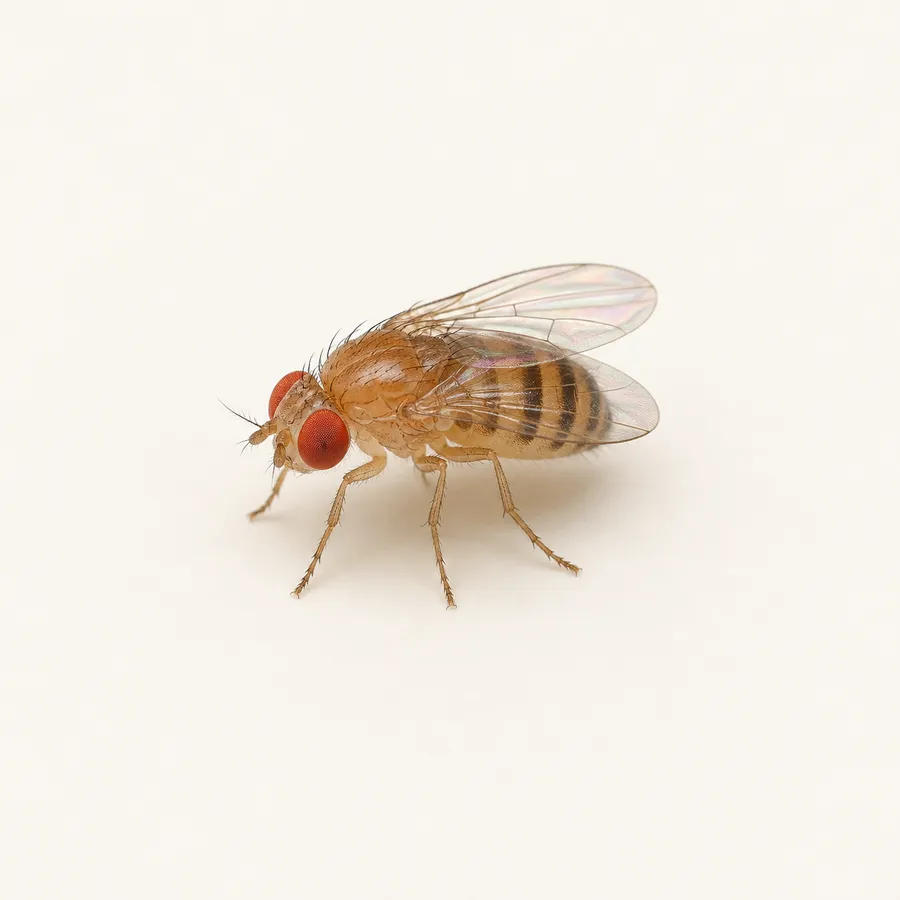
Fruit fly Drosophila melanogaster
Yellowish brown with red eyes, hovering slowly around the fruit bowl, the bin and the sink. It lays eggs in anything that ferments: an overripe banana, a rotting potato at the bottom of the crate, leftover juice in bottles waiting for recycling, and slime inside a drain as well.

Drain fly Psychodidae
Hairy and grayish, with wings that look like a tiny moth’s. You usually see it resting on the shower wall or near the toilet. The larvae live in the layer of slime inside the drain, in a trap that isn’t used, and sometimes in a cracked pipe under the floor.
House fly Musca domestica
Gray, with four dark stripes along its back. It breeds in organic waste, compost and animal droppings, usually outdoors, and comes in through open doors and windows. When there are a lot of house flies inside, the source is usually in the yard, in the bins or at the neighbors’.
Before treating, you need to know what it is and where it breeds. The place where you see the most gnats is a good clue, but it isn’t always the source itself. These are the checks I do, and you can do some of them yourself:

- 1
A cloud around the fruit
Gnats that rise up when you move the fruit bowl or open the bin are almost always fruit flies. Also check for fruit that rolled behind the fridge, and the bottom of the potato and onion crate.
- 2
A gnat on the shower wall
A hairy gnat with heart-shaped wings that rests on the wall near the drain and barely moves is a drain fly. The source is almost always the drain in that same room.
- 3
The tape test
In the evening, stick clear tape over the drain opening, leaving a small gap for air. If there are gnats stuck to the underside of the tape in the morning, that drain is the source.
- 4
Suspect fruit in a bag
Put a suspect fruit or vegetable in a sealed clear bag for a few days. If gnats appear inside, they hatched from the fruit itself.
- 5
Gnats near the houseplants
Thin black gnats that rise from the potting soil when you water are fungus gnats, not fruit flies. They love soil that’s too wet, and the fix starts with watering less.
- 6
Big flies by the window
House flies gathering near a window or door usually come from outside. They’re a sign to look for a bin without a lid, compost or droppings in the yard.
People contact me after weeks of vinegar traps and sprays, and the gnats are still everywhere. Usually it has nothing to do with how clean the home is. There’s one source that hasn’t been found yet.
Spray only kills adults
The eggs and larvae are inside the fruit, the bin or the drain. A new generation hatches every day, so spraying buys you a day’s break and no more.
Bleach flows right past the slime
Bleach or boiling water poured into a drain runs down the middle of the pipe. The layer of slime on the walls, where the larvae live, stays where it is. It has to be removed mechanically.
A vinegar trap catches, it doesn’t solve
A cup of apple cider vinegar with a drop of soap catches fruit flies, and it’s a good way to see how many there are. As long as the source is still there, new generations hatch faster than it can catch them.
Sources nobody thinks of
The drip tray under the fridge, the dishwasher filter, the trap of a sink nobody uses, or a floor rag left wet. These are the places people don’t check.
A cracked pipe under the floor
When drain flies keep showing up after every drain has been cleaned, sometimes the source is a leak or a broken pipe under the floor. In that case I tell you that you need a plumber, and I don’t sell you a treatment.
In most homes the work is mainly tracking down the source and cleaning it, and pesticide plays only a small part. This is the order I work in:
- 1
Identification from a photo
A sharp photo of one gnat and the spot where it rests is usually enough for me to tell whether it’s a fruit fly, a drain fly, a fungus gnat or a house fly. Each one leads to a different source.
- 2
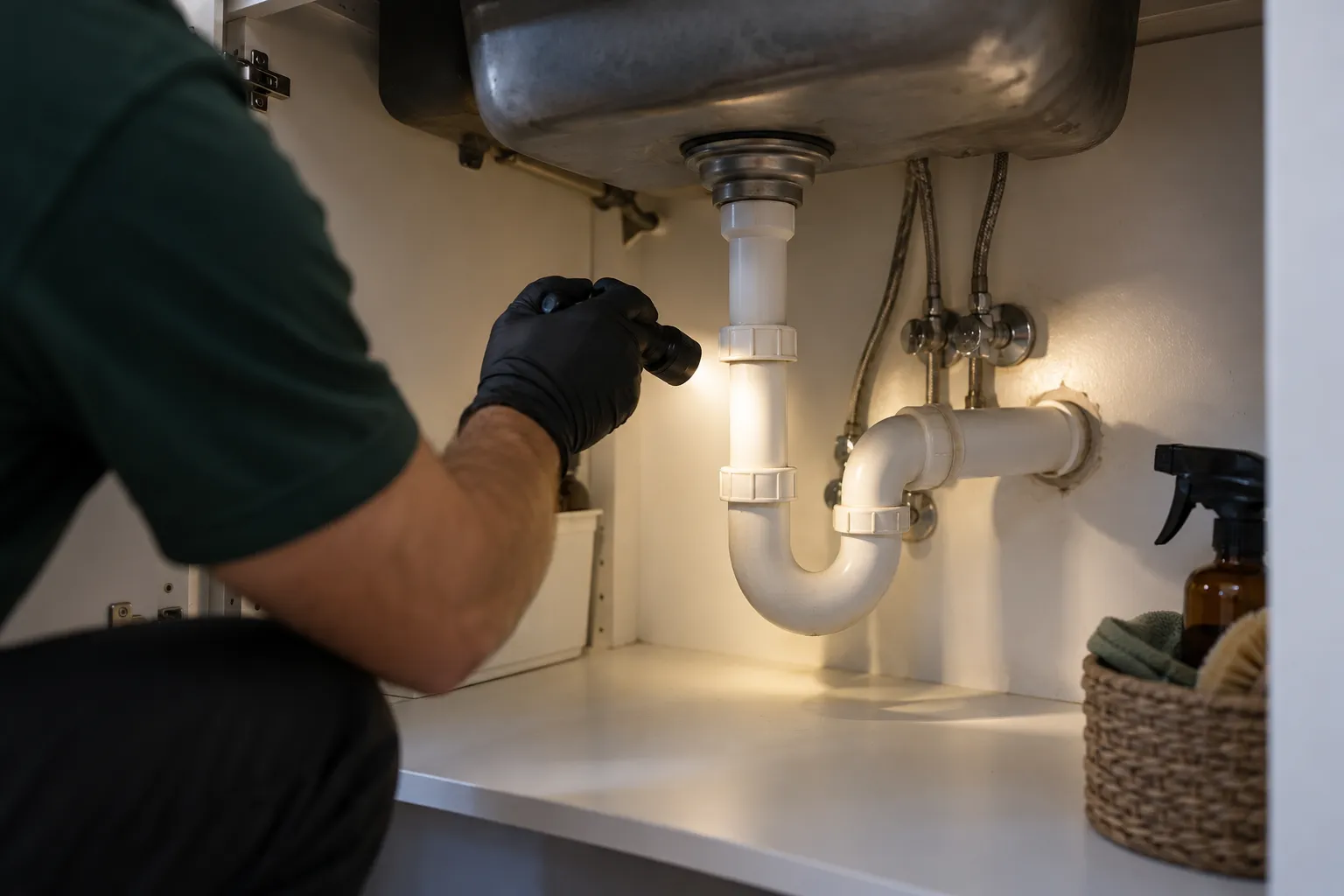
Scanning for sources
With a flashlight I check every drain, trap and floor drain, the bins and the tray under the fridge, and the place where you keep fruit and vegetables. Outside, I check bins, compost and gutters.
- 3
Cleaning the drain mechanically
In a drain where I’ve found larvae, I brush the slime off the walls of the trap and leave a biological product that breaks down what’s left. No bleach.
- 4
Targeted treatment outside
When there are house flies, I treat the walls where they rest near the garbage bin, or set fly bait around the bins. Inside the kitchen I don’t spray countertops.
- 5
Closing the ways in
I point out torn screens, a gap under the door and drains without covers. In a floor drain that isn’t used, keeping water in the trap or fitting a cover stops the sewer from coming up through it.
- 6
Instructions for the next week
You get a short list from me on WhatsApp: what to clean, how often, and how to check with tape yourself that the source is closed.
Do
- Don’t clean the drains the day before, so I can see where the larvae are
- Leave fruit and vegetables where you usually keep them
- Clear access to the sink, the showers and the floor drains
- Note where and at what time of day you see the most gnats
- Photograph one gnat up close, and the surface it rests on
- Tell me about any drain that isn’t used, such as the shower in a guest bathroom
- Leave the bin where it is, without rinsing it out or changing the bag
No need
- Spraying the home before the visit
- Pouring bleach into every drain
- Throwing out all the fruit in the house
- Buying an insect lamp before we’ve found the source
- Hanging sticky strips all over the house. They count flies, they don’t touch the source
- Leaving the house. With gnat treatment you can stay
Ripe fruit goes in the fridge
In summer, very ripe fruit and soft tomatoes go into the fridge. Fruit like that left out on the counter attracts fruit flies that very day.
Rinse bottles for recycling
Leftover juice, beer and wine at the bottom of a bottle is a perfect place to lay eggs. A quick rinse before the bottle goes into the recycling bag is enough.
A drain that’s clean inside
Once every week or two, run a thin drain brush through the sink and shower traps. It removes the slime the larvae need.
Drains that aren’t used
A shower nobody uses or a floor drain on the laundry balcony dries out, and the sewer comes up through it. Pour water into them once a week, or close them with a cover.
A closed bin, emptied often
A bin with a lid that shuts, a bag changed every day or two in summer, and the bottom of the bin washed out when liquid collects there.
Window screens
An intact screen on the kitchen window and the balcony door stops most house flies coming in from outside. Check that it has no tears near the frame.
Droppings and compost in the yard
Dog droppings, open compost and garbage bags by the door are breeding grounds for house flies. Picking up every day in summer brings the numbers down fast.
How long I am in the house
Usually 45 minutes to an hour and a half. Most of it is hunting the source with a torch: every drain, every trap, the floor gullies, the tray under the fridge, the bin and the area around the plant pots. The treatment itself is short.
Where I actually work
Inside the drains and traps, under the sink and the fridge, next to the bins outside, and on the walls where house flies rest. I don’t spray worktops and I don’t go into food cupboards.
You can stay at home
There’s no spraying of living spaces here, so there’s no waiting time and no need to go out. If a spot treatment outside near the bins is still needed, I tell you beforehand what to keep away from and for how long.
The drain is out of use for a few hours
After the mechanical cleaning I leave a biological product inside the trap that needs time to work. I tell you how many hours not to run that drain, and it’s usually convenient to do this before the night.
Food flies have landed on
A house fly lands on garbage and then on food, carrying bacteria on its legs. Food that sat uncovered and had flies land on it is better not served to babies or the elderly.
No spraying on countertops
In the kitchen I don’t spray surfaces that touch food. When a product is needed, it goes into the drain or is placed outside the home, away from children and pets.
Bait out of reach
House fly bait goes in a closed station or up high, near the bins, where a dog or a child can’t reach it.
Don’t mix products in the drain
The biological product I leave in the drain breaks down organic matter. Don’t pour bleach or other cleaners over it, and keep children away from the drain until it has been rinsed through.
The price includes finding the source, cleaning and treating the drains where I found larvae, and instructions for afterwards. I tell you what it will cost in your home after the identification.
| Property or treatment | Price |
|---|---|
| Apartment: fruit flies or drain flies, one or two sources Most common | ₪350 |
| Private house with a yard, including house flies and bins | From ₪450 |
| Apartment building: bin room, manholes and drains | From ₪550 |
| Restaurant or food business, after a site survey | From ₪650 |
What changes the price
- How many drains and traps need cleaning and treatment
- Whether the source is outside: bins, compost, droppings or a gutter
- In food businesses: the number of floor drains, the equipment and how often visits are needed
How you know the gnat treatment worked, and how you know they came back
The sticky tape test
Stretch clear tape over the drain opening at night, sticky side down, and check in the morning. Gnats that hatched inside the pipe get stuck on the underside. That’s the test that tells you whether the source is still alive, and I leave it with you as a method for the weeks ahead.
Seven to fourteen days
A fruit fly hatches in about a week, and a drain fly takes longer. So the numbers drop gradually rather than vanishing in a day. I ask you to count how many you see in the evening, in the same room, once a day.
How I measure success
A drain with no gnats on the tape for three nights in a row is a clean drain. If one drain is still producing them, that’s where the source is, and not in the fruit on the worktop.
The test that finds the guilty drain
Run the tape test on every drain in the house on the same night, and label each one with a note. In the morning you see exactly where they come from, instead of guessing and pouring products everywhere.
The signs that say they came back
Gnats rising in the morning the moment you open the tap; small black specks on the wall above the drain, which is where they rest; a slimy film returning on the wall of the trap; and gnats specifically around the plant pots, which point to soil that stays too wet.
What to do when they come back
Don’t pour bleach over the biological product. Run a tape test, photograph the result, and send it to me. There’s a warranty on the treatment. If gnats come back from the same drain or the same source during the warranty period, I come back to check and treat it.
What also depends on you
Fermenting fruit or an open bin creates a new source within days. I explain in advance what’s covered, and what you need to keep doing at home so the result lasts.
A plumbing fault
When the source is a broken pipe under the floor, I tell you so and refer you to a plumber. I don’t do the repair myself.
With fruit flies, doing it yourself really works
If you’ve found the fruit or the bottle and thrown it out, brushed out the trap and set out a cup of vinegar with a drop of soap, in most cases it’s over within one to two weeks. I’m putting together a home kit for gnats. Until it’s ready, send me a photo and I’ll tell you whether you can manage on your own.
Where do gnats come from when there’s no fruit in the house?
Usually from the drain. The layer of slime on the walls of the trap is enough for both fruit flies and drain flies to lay eggs and raise larvae. Other sources I find: the tray under the fridge, the dishwasher filter, the bottom of the bin, and a floor rag left wet.
Are drain flies a health risk?
They don’t bite or suck blood. They do hatch from sewer and drain slime, so it isn’t pleasant when they land in the shower or near dishes. The main reason to treat them is that they point to a dirty drain, and sometimes to a plumbing fault that’s worth catching early.
Why do I only see drain flies in the bathroom?
Because they’re weak fliers and stay close to where they hatched. A drain fly resting on the shower wall most likely hatched from that shower’s drain, the sink beside it or the floor drain. A tape test on every drain in the room, left overnight, shows exactly which one they’re coming from.
Will boiling water or bleach in the drain get rid of the gnats?
Usually not. They run down the middle of the pipe, past the layer of slime on the walls where the larvae live. What works is removing it mechanically with a thin drain brush, followed by a biological product that breaks down what’s left. After cleaning like that, a tape test shows whether the source is really closed.
How long does it take to get rid of fruit flies?
Once the source is found and thrown out, the numbers drop clearly within a few days, and within one to two weeks they’re gone, especially with a vinegar trap catching the adults that are left. If there’s still a cloud by the sink or the bin after a week, there’s probably another source that hasn’t been found yet.
We get big flies in the house every summer. Where do they come from?
House flies breed in organic waste and droppings, and the source is usually outside: bins without lids, compost, dog droppings or the bin room in your building. I check the immediate surroundings, recommend screens and better bin habits, and if needed, set fly bait near the bins, outside the home.
There are gnats near the houseplants in the living room. Is that the same thing?
Probably not. Thin black gnats that rise from the soil when you water are fungus gnats, and their larvae live in wet soil. Water less and let the top layer dry out between waterings, and a yellow sticky trap by the pot catches the adults. Usually there’s no need for pest control.
Is an insect lamp worth the money?
At home, in most cases, no. A lamp catches house flies that are already inside, but doesn’t touch the source, and has almost no effect on drain flies or fruit flies. In a food business kitchen, a lamp with a glue board is a good monitoring tool. A device that electrocutes flies scatters insect fragments, so it isn’t suitable above a work surface.
The drain flies keep coming back even after we cleaned everything. What now?
If every trap has been cleaned mechanically and gnats still appear, I check three things: a forgotten drain, like a floor drain under a cabinet or on the laundry balcony, a seal around the toilet that has shifted, and a cracked pipe or a leak under the floor. For the last two I refer you to a plumber, because they need a repair.