In short
Israeli homes mostly get two kinds of cockroach, and each needs a different treatment. The small, light-brown German cockroach breeds in kitchens and cupboards. The large, reddish American cockroach comes up from sewers and manholes. Home sprays only hit what you see and leave the egg cases behind. I place gel in hinges and cracks, seal the gaps they get in through, and return for a follow-up visit after 2–3 weeks.
- Size
- German 12–15 mm · Oriental 20–30 mm · American 30–40 mm
- Activity
- At night. By day they pack into cracks near water and warmth
- Water
- Survives a long time without food, but dries out within days without water
- Eggs
- Laid in a case. A German cockroach case holds 30–40 eggs
- Hatching to breeding
- 6–12 weeks for the German cockroach, in a warm kitchen
- Hiding place
- A crack a few millimeters wide, tight enough to touch its body on both sides
- Health
- Carries germs from place to place and leaves allergens that make asthma worse
- Season
- The American on humid summer nights. The German all year round, indoors
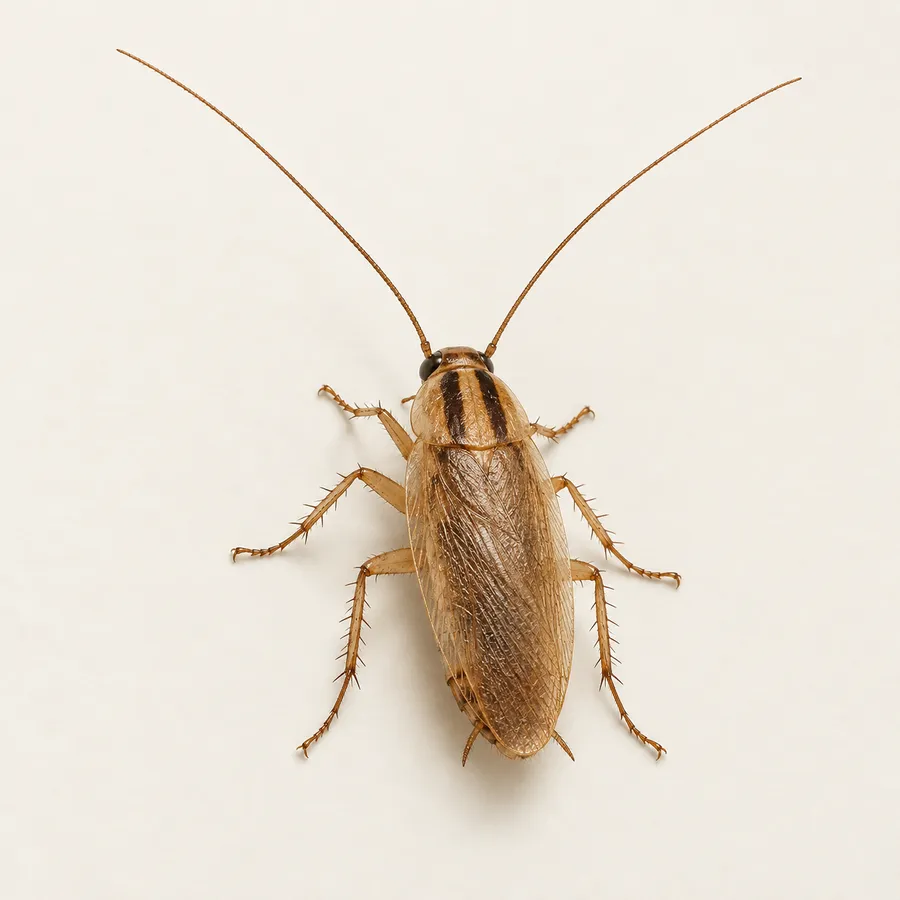
German cockroach Blattella germanica
Light brown, 12–15 mm, with two dark stripes on the shield behind the head. It lives indoors: in the kitchen and bathroom, in cupboard hinges, in the fridge’s motor compartment and behind the microwave. If you’ve seen one, it’s probably already breeding in your home, so the treatment has to reach its hiding places and its young.
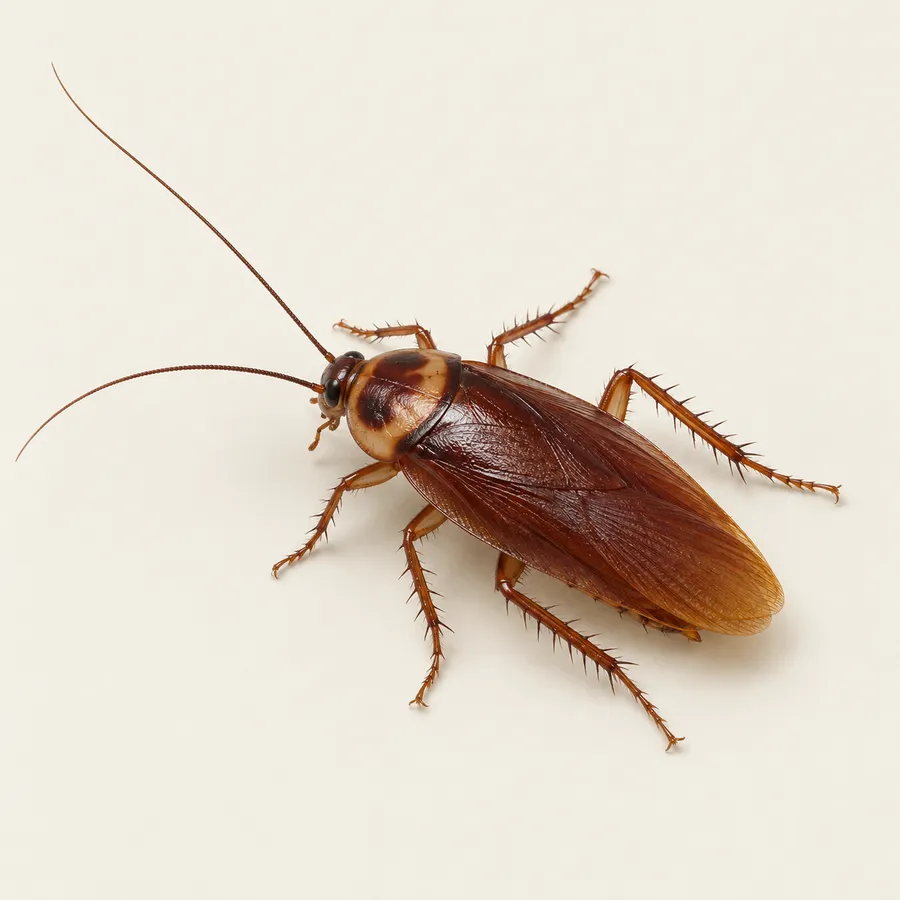
American cockroach Periplaneta americana
Shiny reddish brown, 30–40 mm, and able to glide short distances. It lives in sewers, manholes, pipe shafts, parking garages and basements, and gets into the apartment through a drain or a gap around a pipe. A single American cockroach on a summer night is usually a visitor from outside, and treating it starts with closing off its way in.
Oriental cockroach Blatta orientalis
Dark brown to black, 20–30 mm, with a solid body and slow movements, and it doesn’t fly. It likes damp, cool places: storerooms, stairwells, gardens and drain inspection chambers. I treat it around the building and at the points it passes through, not only where you saw it.
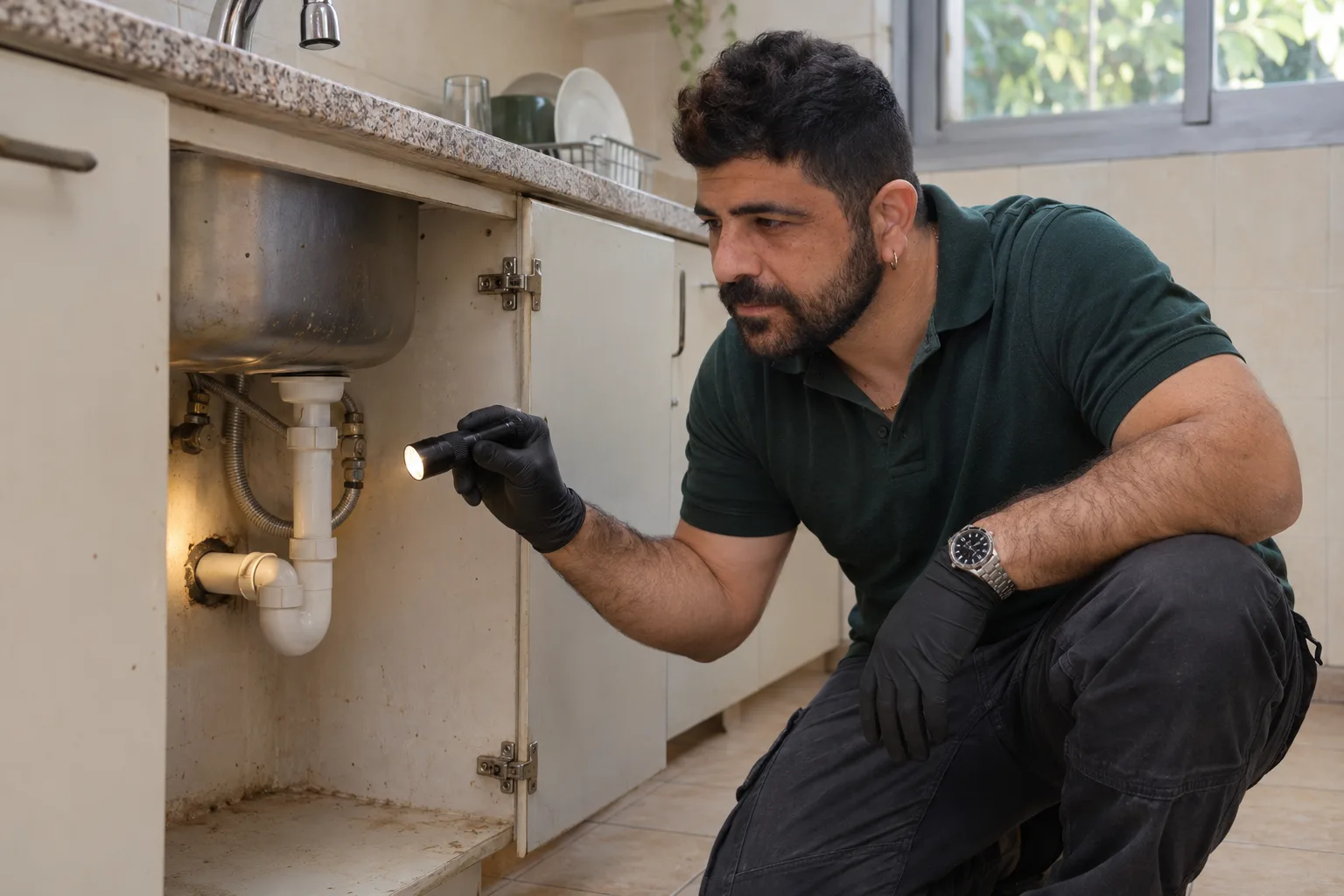
You mostly see the cockroaches themselves at night, when you switch on the kitchen light. During the day they’re packed into narrow cracks near water and warmth, so in most homes I identify them by what they leave behind. These are the signs I look for with a flashlight.
- 1
Black specks in hinges
Tiny grains like ground black pepper in cupboard hinges, drawer corners and behind the fridge. These are droppings, and they mark an active hiding place.
- 2
Egg cases
Brown capsules less than a centimeter long, in cracks and dark corners. An empty case means a generation has already hatched from it.
- 3
Young cockroaches
Tiny, dark cockroaches without wings. A young cockroach in the kitchen is the clearest sign that they’re breeding in your home, not coming in from outside.
- 4
Shed skins
Translucent brown shells shaped like a cockroach, near the hiding place. Each one marks another growth stage of a young cockroach.
- 5
A musty, sweetish smell
In a long-standing infestation, a heavy smell rises from the cupboard under the sink or from a cupboard that stays closed. It comes from the droppings and secretions that build up in the hiding place.
- 6
Cockroaches in broad daylight
Cockroaches come out in the light when their hiding places are already crowded. If you see them on the counter at midday, the infestation is well past its early stages.
The first thing I hear on the phone is almost always “The house is clean, so where did they come from?” Cockroaches come for water, food and shelter, and water matters to them most. That’s why the source is almost always right next to the plumbing: under the sink, behind the dishwasher, around the fridge water line and in the laundry balcony drain.
A dried-out drain trap
In a drain nobody uses, on the laundry balcony, in the guest shower or in a storeroom floor, the water in the trap evaporates within weeks in summer. That leaves an open pipe from the sewer into the apartment, and the American cockroach climbs right up it.
German cockroaches hitch a ride
They hardly ever walk in from outside. They arrive in a delivery box, a crate of vegetables, a suitcase, and above all in a second-hand appliance. An egg case stuck in a fridge’s motor compartment survives the move with no trouble.
The walls are connected
Hollow blocks, pipe sleeves, shutter boxes and the gap above the kitchen cabinets form an inner corridor between rooms, apartments and floors. A cockroach that squeezes into a crack under your sink isn’t trapped in your kitchen.
Egg cases survive spraying
The female German cockroach carries her egg case almost until it hatches. Spray kills the adults, and the case still hatches after the mother is dead. That’s why spraying is usually followed by two quiet weeks, and then a new generation starts a cycle of its own.
Repellent spray scatters them
The spray drives cockroaches away from the source, deeper into the walls and into other rooms. That’s why people suddenly see cockroaches in the bedroom after spraying, and why the gel I place afterwards works more slowly.
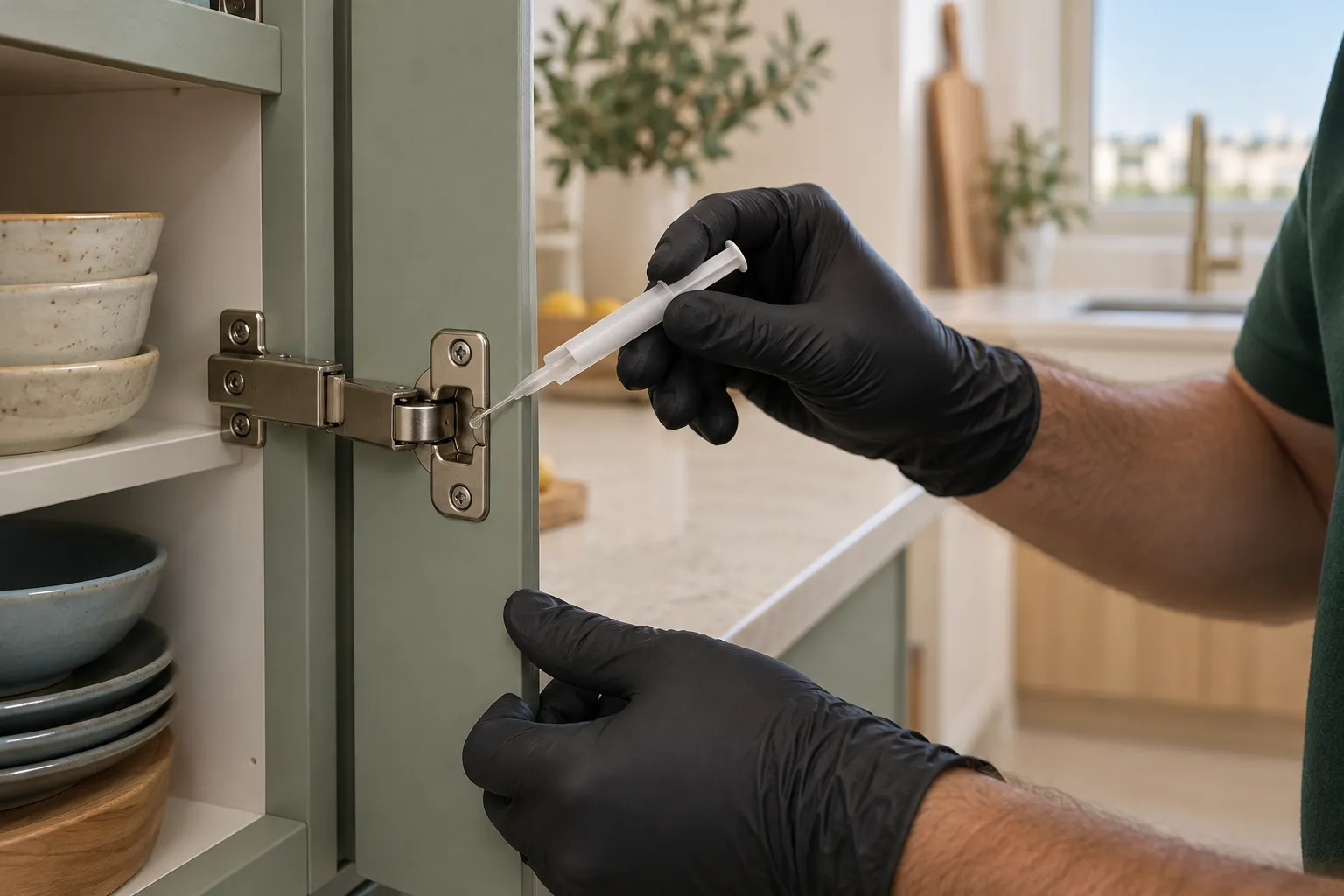
I don’t spray a whole kitchen. I look for the cockroaches where they live, and that’s where I place a small amount of product that they carry back to the hiding place themselves. That way it also reaches the young ones that never come out.
- 1
Identifying and mapping
I work out which cockroach you have and shine a flashlight into its spots: under the sink, behind the dishwasher and fridge, in hinges and drawer runners, in drains and shutter boxes. The species tells me whether the source is inside the home or outside it.
- 2
Gel in tiny dots
Small drops inside hinges, cracks and gaps near the pipes, not smeared on surfaces. The gel doesn’t repel and works with a delay. The cockroach eats, goes back to its hiding place, and there the product passes on to cockroaches that didn’t come out.
- 3
Growth regulator
When cockroaches are breeding in the home, I add a growth regulator. It doesn’t kill adults, but it stops the young from maturing and breeding. The gel brings the numbers down now, and the regulator stops the next generation.
- 4
Closing the way in
I seal the gaps around the pipes under the sink, behind the toilet and where the air-conditioner line passes through, and I check drains that have dried out. With the American cockroach this is the main part of the treatment, because it comes from outside.
- 5
A follow-up visit after 2–3 weeks
That’s the window when the generation from the egg cases has hatched but hasn’t had time to breed. I check how much gel was eaten at each spot, top up where needed, and switch to a different bait base if the cockroaches are ignoring it.
Do
- Clear the cupboard under the sink and the drawers next to the stove, so I can reach the hinges and corners
- Wipe the counter and move open food into sealed containers
- Pour a cup of water into every drain you don’t use, starting today
- Pull the fridge and the oven a few centimetres off the wall, if that works without unplugging them
- Photograph one cockroach, and for a few days note which room and what time you saw them
- Wash the kitchen floor the day before, not on the morning I arrive
- Tell me in advance about a baby, pregnancy, asthma, pets or an aquarium
No need
- Spraying before I arrive. Spray scatters the cockroaches and weakens the gel I’ll place
- Emptying every kitchen cupboard. I work in hinges, runners and cracks, not on the shelves
- Scrubbing the hiding places clean. The droppings in the corner of the cupboard show me where they sit
- Throwing out a cupboard, a fridge or a microwave. I treat inside the appliance and behind it
- Leaving the house. With gel treatment you can stay, children included
Water in every drain trap
Pour a cup of water into every drain you don’t use: the laundry balcony, the guest shower, the storeroom floor drain. Once a week in summer, every two weeks in winter.
Leaks and damp
Cockroaches get by on a small leak under the sink, an air-conditioner drip tray or a wet towel left on the floor. Fix leaks and dry the sink before bed.
Fewer cardboard boxes
A closed-in balcony turned storeroom, a pile of bags under the sink and the space above the cabinets are classic hiding places. A delivery box should leave the house as soon as you’ve unpacked it.
Check second-hand appliances
Before a used fridge, microwave or dishwasher goes into your kitchen, shine a flashlight into the motor compartment and the back. That’s where German cockroach egg cases ride along in a move.
Door sweeps, screens and shutters
A door with no brush strip at the bottom, a torn screen, an open shutter box and plants touching the outside wall all give the American cockroach a way in. Each one is a small fix.
Don’t wash off the gel
In the weeks after the treatment, clean the kitchen as usual, but don’t wash the hinges and gaps I treated and don’t spray near them. A repellent next to a gel spot cancels it out.
How long I am in the house
In an apartment the treatment usually runs between 40 minutes and an hour and a half, depending on the number of rooms and how many appliances have to be moved. In a private house with a yard and sewer points it takes longer, because part of the work is outside.
Where I actually work
In the kitchen and the bathroom: inside cupboard hinges, in drawer runners, behind the fridge, the oven and the dishwasher, in the corners near the plumbing and in shutter boxes. I don’t spray walls and I don’t go into clothes closets.
You can stay at home
The gel goes down as small drops inside closed spaces, so ordinary cockroach treatment has no waiting time and there’s no need to clear the apartment. If a local spray is still needed, I say in advance how long to keep away from that room and what to ventilate.
Children and pets while I work
A crawling toddler or a curious dog can’t reach the gel points, because they sit inside hinges and behind drawers. While I move the fridge or the oven I ask that children and animals wait in another room, so nothing heavy comes down near them.
Tell me who lives at home
A baby, pregnancy, asthma, a cat, birds or an aquarium change which product I choose and where I place it. I ask about this before I open my kit bag.
You know what comes into your home
The law requires a licensed exterminator to give you information before the treatment about the product, its risks and what you need to do. I send it on WhatsApp, with the product name and the waiting time, before I even knock on your door.
What not to wash in the weeks after
Normal cleaning of the counter and the floor is fine the same evening. The hinges, runners and grooves I treated are not washed and not sprayed, because a repellent product next to a gel point cancels it out.
Cleaning out the hiding places at the end
Cockroach droppings and remains crumble into house dust and make asthma and allergic rhinitis worse, especially in children. The droppings also draw new cockroaches to the same corner. When the treatment is over, I tell you when to clean out the old hiding places thoroughly.
The price depends on the number of rooms, and for a ground-floor apartment or a house also on the yard and the number of sewer drains. It includes identification, gel and growth regulator, sealing the main entry points, a follow-up visit when needed and a warranty. You hear from me what it will cost in your home once I’ve identified the cockroach.
| Property or treatment | Price |
|---|---|
| Apartment up to 3 rooms | ₪350 |
| Extras | |
| Each additional room | Extra₪50 |
| Ground-floor apartment or house: perimeter and small yard | Extra₪50 |
| Perimeter and large yard | Extra₪100 |
| Perimeter and extra-large yard | Extra₪150 |
| Sewer drain or manhole treatment | Extra₪35per drain |
| Ants too, on the same visit | Extra₪100 |
How it adds up: A 4-room ground-floor apartment with a small yard and two sewer drains: ₪350 for the first three rooms, ₪50 for the fourth room, ₪50 for the yard and ₪70 for the two drains. Total: ₪520.
What changes the price
- Which cockroach: with the German one I work inside the home, with the American one also in drains and entry points
- How long-standing the infestation is, and whether it needs more than one visit
- How many gaps need sealing, and whether there’s a manhole or dry drains in the yard
- Whether the source is in your apartment or in a shaft, the bin room or a neighboring apartment
- For a business, office or commercial kitchen, I give a price after an on-site survey
How you know the cockroach treatment worked, and how you know they came back
The first days: you see more, not fewer
In the first days you may see cockroaches out in the middle of the floor even in daylight, some of them slow or dead. That’s what happens when the product starts working inside the harbourage, and it isn’t a sign that the treatment failed.
Two to three weeks: the generation from the egg cases
This is the window in which the eggs that sat in the cases on treatment day have hatched, and you may see small pale cockroaches. They reach the gel just as the adults do, which is exactly why I schedule the follow-up visit for this point.
A month in: how I measure success
At the follow-up I check how much gel has been eaten at each point, look for fresh droppings and watch for juveniles. Gel points nobody touched and droppings that haven’t been renewed are the sign that the colony is no longer active.
The check you can run yourself
Walk into the dark kitchen after midnight and switch on a small torch instead of the main light. If there’s no movement on the floor, on the counter or in the corners near the plumbing on two separate nights, you’re in good shape.
The signs that say they came back
Fresh droppings that look like ground black pepper in the cupboard corners or on a drawer runner, a brown purse-shaped egg case, pale juveniles rather than adults alone, and a sweetish greasy smell in the cupboard under the sink.
What to do when you see one again
Don’t spray. Photograph it, note which room and what time, and send it to me. There’s a warranty on the treatment. If the cockroaches come back during the warranty period, I come to check and complete the treatment. I explain what’s covered, and for how long, before I begin.
When it isn’t a return at all
One large American cockroach on a summer night is usually a visitor that climbed up from the sewer, rather than a colony back in the house. There the treatment belongs in the drain and the opening it came through, not in the kitchen cupboards.
A source outside the apartment
If the cockroaches come from a shared shaft, the bin room or a ground-floor business, I tell you so at the diagnosis stage and explain what the apartment treatment covers and what it doesn’t.
When you can handle it yourself
One American cockroach that wandered in on a summer night doesn’t call for pest control. Refill the drain trap with water and check the gap it came through. Against German cockroaches breeding in the kitchen, a supermarket spray is almost never enough. With cockroaches, the right DIY treatment can work, and soon I’ll have a home kit with gel and instructions.
How long does it take to get rid of cockroaches after treatment?
With a light infestation you see a clear drop within a few days. Full quiet usually comes after two to four weeks, once the generation that hatched from the egg cases has also eaten the gel. With a long-standing infestation, a cluttered kitchen or a shared building, another visit is almost always needed. The pace depends on access to the hiding places, not on the amount of product.
I saw one cockroach. Does that mean there are more?
It depends on the cockroach. A large reddish one you saw once at night is usually a visitor that came up from the drain or in from the yard. A small, light-brown cockroach in the kitchen, especially a tiny young one, almost always means a colony is breeding in your home. In that case, send me a photo, even if you’ve only seen one.
If I keep the kitchen clean, will cockroaches stay away?
Cleanliness cuts down their food and slows breeding, but it doesn’t keep them out. German cockroaches arrive in a box or a used appliance and get by on tiny crumbs. American cockroaches come up from the sewer whatever state the kitchen is in. Sealing entry points, fixing leaks and keeping water in drain traps affect the chance of an infestation as much as cleaning does.
Do I need to leave home during cockroach treatment?
Not with gel treatment. I ask you to clear the counter and the cupboards near the hot spots, and not to touch the spots I treated until they dry. If I also use spray somewhere, I tell you in advance how long to wait before going back into the room, according to the product label.
Why are there more cockroaches in summer?
Heat shortens the time from hatching to adulthood, so cockroaches breed faster. It also dries out the traps in unused drains and opens a direct route from the sewer. That’s why most calls about American cockroaches come on humid summer nights. The German cockroach is active all year in a heated kitchen and depends less on the season.
Can a supermarket cockroach spray solve the problem?
It kills the cockroaches it hits directly, but it doesn’t reach the egg cases or the hiding places inside the walls. Most sprays also repel, so they push cockroaches deeper and make the treatment that follows harder. Against a single cockroach from the yard it may be enough. Against a colony breeding in your home, almost never.
Do cockroaches bite or sting?
No. Cockroaches don’t sting and don’t feed on blood, so bites you find in the morning have nothing to do with them. Rare cases of nibbling on dry skin have been described in very heavy infestations, but that’s exceptional. The real risk is contamination of food surfaces and allergens that build up in house dust.
Why has the cockroach gel that worked last time stopped working?
German cockroaches have been documented developing an aversion, both learned and inherited, to certain sweet ingredients in the bait base. They stop eating it, and the spot stays untouched. At the follow-up visit I check how much was eaten at each spot, and if they’re eating little, I switch to a different base instead of adding more of the same gel.
A small cockroach in the bedroom or behind a picture: is it a German cockroach?
Not necessarily. There’s another species, the brown-banded cockroach, which is as small as the German one but likes warm, dry, high places: behind pictures, inside electronics and in upper cupboards. They’re easy to confuse, and the difference changes the treatment, because its hiding places are in a different part of the home. A clear photo is enough for me to tell.
Do cockroaches fly?
The American cockroach can glide short distances, mostly on warm nights, and that’s what startles people. The German cockroach has wings but hardly uses them and gets around by running. The Oriental cockroach doesn’t fly at all. Either way, they come into your home on foot, through drains, gaps around pipes and spaces under doors.